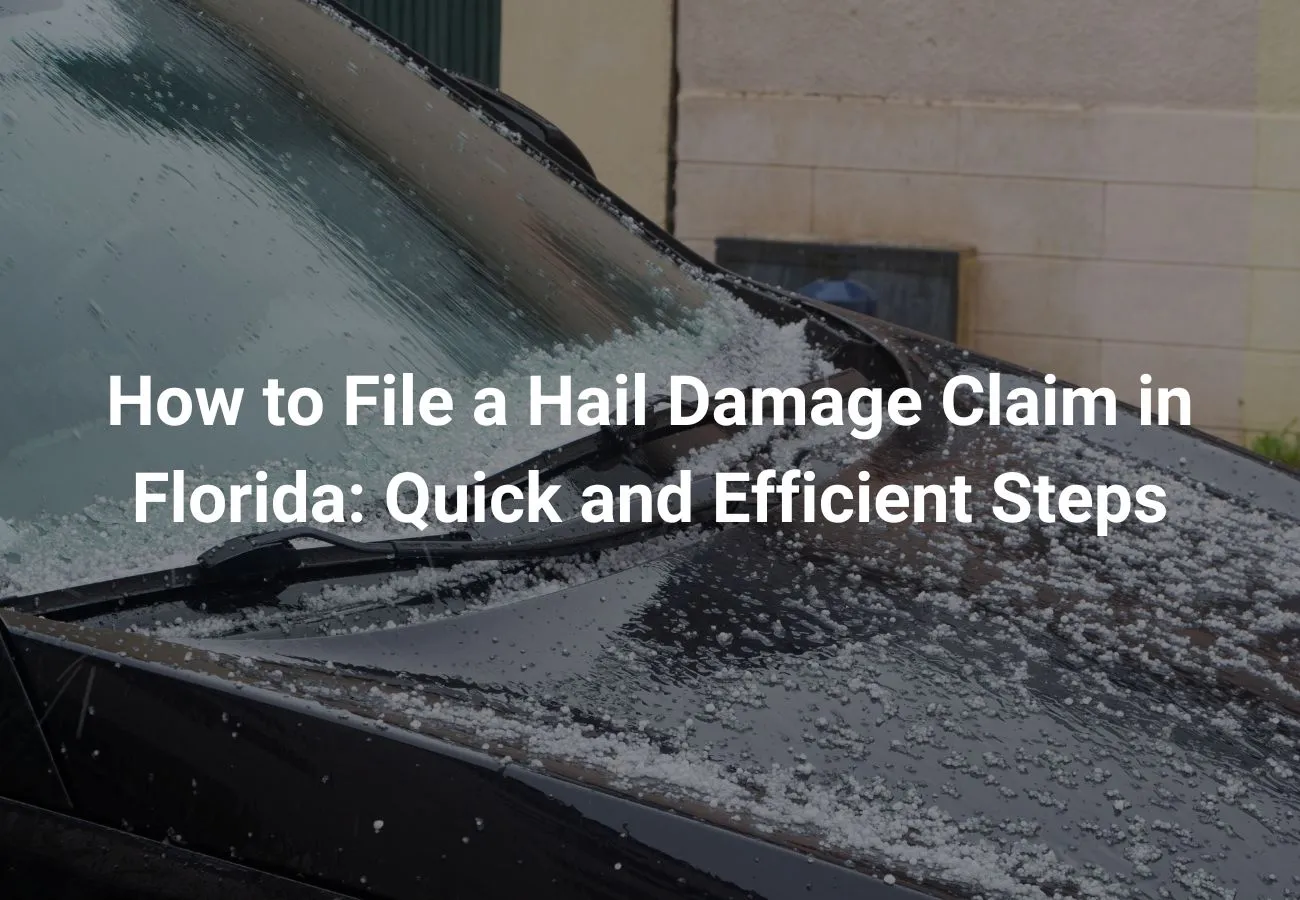
Filing a claim for hail damage to your property in Florida can help you manage the financial impact of a storm. When hail strikes, it can cause considerable damage to your home or vehicle. Under most homeowner’s insurance policies in Florida, hail damage is a covered peril, and as long as the damage has occurred due to a hailstorm, you should be eligible for compensation to cover repairs.
In the event of hail damage, it’s essential for you to act promptly. Start by documenting the damage thoroughly with photographs or videos as this visual proof will support your claim. After recording the damage, reach out to your insurance company without delay to notify them of the situation. It’s critical to give accurate information when you fill out the claim forms provided by the insurer to avoid any potential issues in the claims process.
Dealing with insurance policies and the claims process can be complex. An understanding of your insurance policy terms is vital to ensure that you know what coverage you have for hail-related property damage. You must be prepared to navigate the specific procedures and requirements your insurance company has in place for filing a hail damage claim in Florida. This includes understanding your policy’s deductibles and limits, as these will influence the settlement amount you receive for the repairs.
Understanding Hail Damage Insurance Claims
Navigating the intricacies of hail damage insurance claims can be straightforward when you know what signs to look for, understand the value of professional help, and differentiate the coverage types available to you.
Identifying Signs of Hail Damage
After a Florida hailstorm, inspect your property for damage. Common signs of hail damage include:
- Dents on cars, roofs, or outdoor equipment.
- Shattered or cracked windows and skylights.
- Stripped or damaged vegetation around your home.
Take photos to record the extent of the damage as this is a critical step in filing your insurance claim.
The Role of a Public Adjuster
A public adjuster can be invaluable in managing your hail damage claim. They act as an intermediary between you and your insurance company, ensuring that the damage assessment is thorough and that your claim accurately reflects the cost of repairs. They can often negotiate more favorable claim resolutions on your behalf.
Differentiating Coverage Types
Understanding your policy is crucial. In Florida, Coverage A typically applies to the structure of your home, while auto insurance with comprehensive coverage may cover hail damage to your vehicle. Review your policy or check with your insurance company to confirm coverage details, including the deductible that applies to your claim. Remember, deductibles must be paid before your insurance company will cover the claim costs, so it’s essential to factor this into your financial planning.
The Claims Process: A Step-by-Step Guide
Navigating the claims process for hail damage in Florida is straightforward when you understand each phase. This guide will walk you through the essential steps to file an insurance claim effectively and ensure you are well-prepared to work with your insurance company for a settlement.
Documenting the Damage
- Take Photos: As soon as it is safe, photograph all areas impacted by hail. Capture close-ups of the hail damage and wide shots that show the extent of the damage on your property.
- Record Details: Make note of the date and time of the hailstorm, the size of the hailstones, and any specific damage to document the incident thoroughly.
Filing the Claim
- Contact Your Insurance: Reach out to your insurance provider promptly to report the damage. You can do this via their hotline, website, or mobile app.
- Claim Forms: Complete and submit any required claim forms accurately, providing the documentation of the hail damage you’ve gathered.
Working with an Insurance Adjuster
- Schedule an Appointment: An insurance adjuster will be assigned to your claim. Schedule a meeting for them to evaluate the hail damage firsthand.
- Provide Documentation: Share your evidence and documentation with the adjuster to ensure a fair assessment of the damage.
Understanding the Settlement
- Review of Policy: Familiarize yourself with the specifics of your insurance coverage to anticipate possible compensation for the hail damage.
- Settlement Offer: After the adjusters’ assessment, your insurance will provide you with a settlement offer. Review this offer closely, ensuring it covers the damages as per your policy terms.
Remember to tackle each of these steps promptly to ensure a smooth insurance claim process for hail damage in Florida.
Repairing Hail Damage: Hiring Professionals
Once you’ve identified hail damage on your property, it’s crucial to engage skilled professionals for repairs. The proper restoration of damage to your roof, windows, and siding ensures not only the aesthetic appeal of your home but also its long-term structural integrity.
Choosing the Right Contractor
When selecting a contractor, your choice should hinge on their expertise, reliability, and track record. Ensure the contractor is licensed and insured in Florida to handle roof and siding repairs. Look for professionals with a history of repairing hail damage and ask for references from recent jobs. Verify the contractor’s standing with local business bureaus.
- Preferred qualifications for a contractor:
- Licensed and insured in Florida
- Specializes in hail damage repair
- Positive references and reviews
- Clean record with the business bureau
Dealing with Roof Repairs
Roof repairs after hail can range from replacing shingles to a full roof replacement. If the damage is severe, with significant granule loss or punctures, a complete overhaul may be necessary. Prioritize hiring a contractor experienced in assessing roof damage; they should be thorough in identifying issues and transparent when discussing the need for repairs versus replacement.
Key considerations for roof repairs:
- Extent of Damage: Evaluate whether there’s a need for replacement of shingles or the entire roof.
- Material Used: Match the new materials with existing ones for uniformity and integrity.
- Adjuster’s Report: Correlate repairs recommended by your insurance adjuster to the contractor’s evaluation.
Evaluating Estimates and Repairs
Before commencing with repairs, collect estimates from multiple contractors. A detailed estimate should include a comprehensive breakdown of the costs associated with labor, materials, and any additional repairs for features like sheds or windows damaged by hail. When evaluating estimates, scrutinize the outlined repairs to ensure they align with the adjuster’s report.
Estimate checklist:
- Detailed list of labor and material costs
- Timeline of repair completion
- Matching repair strategies with the insurance adjuster’s report
- Warranty or guarantee of work provided
By meticulously selecting the right professionals and closely evaluating estimates, you can ensure that hail damage repairs are conducted effectively. Remember, repairing hail damage is not just about fixing the visible issues but restoring your home’s resilience to future weather events.
Legal Considerations and Disputes
In filing a hail damage claim in Florida, you may encounter legal complexities or disputes with your insurance provider. Legal guidance can be essential in ensuring just compensation and handling bad faith claims diligently.
When to Consult an Attorney
If you’re facing obstacles with your hail damage claim, such as denials or underwhelming settlement offers, consult with an attorney specializing in property damage. Free consultations offered by many law firms can provide insight into the viability of your case. An attorney can advocate on your behalf, ensuring the insurance providers adhere to the terms and conditions of your policy and Florida law.
- Reasons to consult an attorney:
- Claim denial or dispute
- Inadequate compensation offered
- Complexities of policy language
Understanding Bad Faith Claims
Insurance companies in Florida must process claims with your best interests in mind. Accusations of bad faith arise when a claim is unreasonably delayed, denied, or handled improperly. If you suspect bad faith, legal representation may be necessary to challenge the insurer’s actions and demand fair treatment.
- Examples of bad faith:
- Unjust denial of a claim
- Failure to investigate promptly
- Lack of clear communication
Maximizing Compensation
To ensure maximum compensation, you must be thorough in documenting the extent of damage. For metal roofs or surfaces with dented metal, provide detailed photographs and repair estimates. Understand your policy’s deductibles and limits, as they will affect your payout. Engaging an attorney can help you navigate these details and push against low settlement offers.
- Steps for maximizing compensation:
- Document damage meticulously with photos and videos
- Retain all repair quotes and invoices
- Review your insurance policy for coverage specifics