You filed a windstorm or fire claim expecting your insurer to pay what it actually costs to rebuild your Florida home. Instead, you got a settlement based on “functional replacement cost” instead of true replacement value. That often leaves you thousands of dollars short, wondering if the payout is even legal. This distinction sits buried in policy language most homeowners never read until after a loss. Yet it decides whether your roof gets rebuilt with matching materials or patched with cheaper substitutes that only restore “functionality.” Krapf Legal breaks down exactly how functional replacement cost provisions work under Florida law in 2026, when insurers can lawfully invoke them, and what steps you can take to challenge an unfair valuation and recover the full amount you’re owed.
What Is Functional Replacement Cost Coverage?
The Basic Definition Explained
This coverage pays to repair or rebuild a damaged property using materials that serve the same purpose as the originals. It does not promise an identical match. The goal is a functioning home, not a perfect replica. A cracked plaster wall might get repaired with drywall instead of plaster, for example.
Insurers describe this as paying the cost to restore a property to a usable condition. That’s different from paying whatever it actually costs to duplicate every original feature. Homeowners often discover this distinction only after filing a claim. That’s exactly why the wording matters before disaster strikes, not after.
Why Insurers Created This Coverage Type
Insurers built this coverage to manage costs on properties where original materials are expensive, rare, or no longer made. Rebuilding with exact vintage materials can cost far more than modern equivalents. Functionally equivalent materials keep repairs affordable while still restoring a livable, working structure.
This approach also cuts down on disputes over sourcing hard-to-find products, like antique tile or old-growth lumber. Storm-related claims, including many arising from florida hurricane claims understanding coverage limitatio…, show how material costs and availability shift fast after major events. That flexibility helps insurers, and in some cases, it helps policyholders too.
Who Typically Gets Offered This Policy
This coverage is common on older homes, historic properties, and buildings with outdated construction methods. Insurers may also offer it when replacement cost coverage would cost too much relative to the home’s market value.
Homes damaged during major storms, including cases discussed in floridas hurricane ian recovery six months later, often show how older properties fare under these policies. Owners of vintage or architecturally distinct homes should review this coverage carefully. Don’t assume it matches standard replacement cost protection.
How Functional Replacement Cost Works in Practice
A Real-World Claim Example
Consider a 1960s home in Tampa with a plaster ceiling damaged by a burst pipe. The original plaster work would cost $18,000 to replicate exactly. Under functional replacement cost, the insurer instead pays to install drywall, a modern equivalent, for roughly $9,500. The homeowner gets a repaired ceiling, but not the historic material they started with.
This payout structure often surprises policyholders who assumed their claim would restore the home to its original condition. Understanding how the property damage insurance claim process works helps set realistic expectations before repairs begin.
How Adjusters Determine ‘Functionally Equivalent’
Adjusters compare the damaged material’s purpose against available modern options. A slate roof might get replaced with asphalt shingles if both shed water and insulate well enough. The adjuster asks whether the substitute does the same job, not whether it looks identical or costs the same to source.
This standard gives adjusters wide discretion, and that discretion leads to disputes. Claims involving older roofs, storm damage, or coastal properties, like those covered under filing an insurance claim after hurricane idalia, frequently trigger these functional-equivalent calculations.
Common Materials Substituted in Claims
Typical substitutions include drywall for plaster, asphalt shingles for slate or tile, vinyl siding for wood clapboard, and laminate flooring for hardwood. Copper pipe often gets swapped for PEX tubing, a cheaper, code-approved alternative.
These swaps show up constantly in roof damage claims, hail damage claims, and water damage disputes, where insurers push for the cheapest functional fix available.
Functional Replacement Cost vs. Actual Cash Value vs. Replacement Cost
Key Differences at a Glance
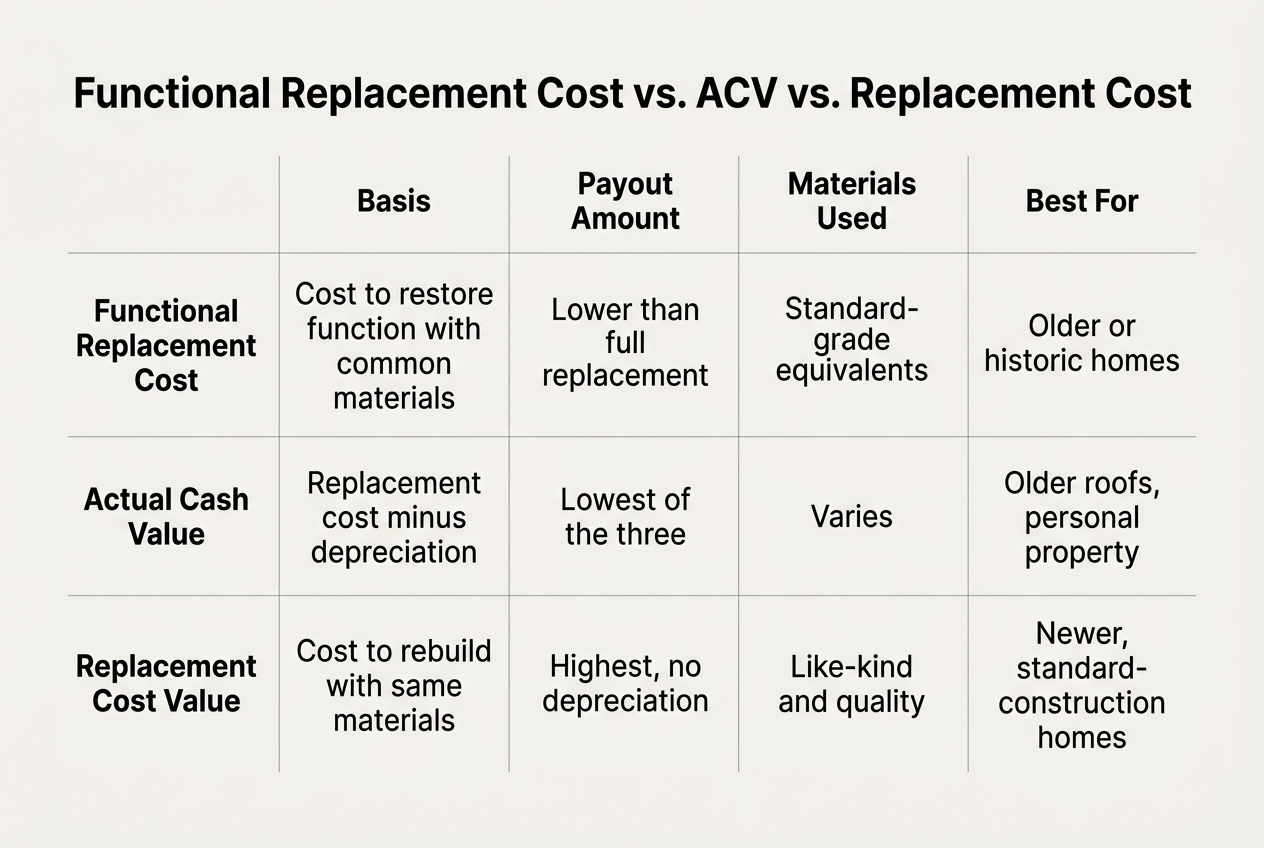
Each valuation method sets a different ceiling on what an insurer will pay. The table below compares the three side by side.
| Valuation Method | Depreciation Applied? | Materials Used to Rebuild | Typical Use Case |
|---|---|---|---|
| Actual Cash Value (ACV) | Yes, full deduction | Same or similar materials | Older homes, some roof claims |
| Replacement Cost Value (RCV) | No, paid after repairs | Same or similar materials | Standard homeowners policies |
| Functional Replacement Cost | No, but capped at “functional” standard | Comparable, less costly materials | Older homes with outdated features |
How Depreciation Factors Into Each
ACV subtracts depreciation for age and wear, often shrinking payouts a lot. RCV skips depreciation once repairs are done. Functional Replacement Cost also avoids depreciation, but it swaps costly original materials for functional equivalents, like standard drywall instead of custom plaster.
Which Pays Out More in a Claim
RCV usually pays the most, since it covers matching materials and full labor costs. Functional replacement cost pays less than RCV but more than ACV in most cases. That gap matters most after major damage, including hurricane losses or claims tied to the unseen impact how mold damage affects your property value.
When Functional Replacement Cost Coverage Applies
Historic and Older Home Situations
Florida has thousands of homes built before 1970, many sitting in historic districts across St. Augustine, Key West, and Tampa’s Hyde Park. These properties often carry functional replacement cost endorsements, because rebuilding them exactly as they were would cost far more than replacing them with modern equivalents. Insurers use this coverage to control costs while still restoring the home’s use.
Owners of these homes should understand what to do when your florida home is at stake before signing any settlement offer. Historic homeowners associations sometimes require specific materials, which can complicate how an insurer calculates a functional payout.
Discontinued or Custom Materials
Homes built decades ago often used plaster walls, heart pine flooring, or clay tile roofs no longer manufactured. When damage happens, insurers may argue that modern drywall or asphalt shingles serve the same function at a lower cost. This is where functional replacement cost coverage typically kicks in.
Custom cabinetry, imported stone counters, and hand-laid brick also fall into this category. Reviewing Functional Replacement Cost vs Replacement Cost helps owners see why substitute materials often spark disputes over quality and value.
Total Loss Versus Partial Damage Claims
Total losses, like a house destroyed by fire or a hurricane, commonly trigger functional payouts. Insurers calculate what it costs to rebuild a functional equivalent, not an exact replica. Partial losses, such as roof damage claims or hail damage claims, sometimes use different valuation rules within the same policy.
This distinction matters when disputes arise over water damage, mold, or storm-related destruction, since coverage terms can shift based on how severe the loss is.
Pros and Cons of Functional Replacement Cost Policies
Advantages for Homeowners
The biggest draw is cost. Premiums stay lower because insurers cap payouts at what common materials cost, not luxury originals. This makes coverage attainable for older homes that standard insurers might reject or price too high. A 1940s bungalow with plaster walls and old-growth wood trim can still get insured, just under different terms.
Drawbacks and Hidden Limitations
The tradeoff is a narrower payout scope. Homeowners with hardwood floors, custom millwork, or hand-laid tile may recover far less than actual repair costs. Reviewing the functional replacement cost provision or endorsement language before a loss helps homeowners understand exactly what’s excluded.
| Feature | Standard Replacement Cost | Functional Replacement Cost |
|---|---|---|
| Premium Cost | Higher | Lower |
| Custom Millwork Coverage | Full replacement | Standard-grade substitute |
| Older Home Insurability | Often difficult | More accessible |
| Payout on Unique Materials | Matches original | May fall short |
Situations Where It Backfires
This coverage backfires when unique features aren’t factored into the policy limit. A historic home with imported tile or antique fixtures could face serious underinsurance after fire or hurricane damage. Homeowners should also review proactive measures to minimize water damage in florida homes, since prevention cuts down on claim disputes altogether.
How This Coverage Affects Your Premiums and Policy Costs
Why Premiums Are Typically Lower
Functional replacement coverage often costs less than full replacement cost coverage. Insurers price it lower because they aren’t promising to rebuild with identical materials. Instead, they cover repairs using common, functionally equivalent materials. This narrower promise shrinks the insurer’s expected payout, which lowers your premium.
For an older home with plaster walls or a slate roof, insuring full replacement cost can get expensive fast. Functional replacement coverage lets owners insure the property at a more affordable rate. Many owners of older homes choose this option just to control yearly costs. Lower premiums are the main trade for accepting a different repair standard.
Insurer Risk Assessment Behind the Discount
Insurers calculate premiums based on expected claim costs. When a policy allows modern, cost-efficient materials instead of exact replicas, the insurer’s worst-case payout shrinks. That directly cuts the risk they carry on your property.
Underwriters also factor in a property’s age, construction type, and claim history. Older homes carry higher risk for issues like plumbing failures, roof deterioration, or hidden mold. For guidance on how coverage limits interact with these risks, this explanation of does my insurance policy cover mold damage understanding… coverage limits can help. Insurers use this risk data to set both premiums and claim payout structures.
Long-Term Cost Tradeoffs to Consider
Lower premiums can mean lower payouts after a hurricane, fire, or hail event. Owners may face higher out-of-pocket costs if repairs run past the functional standard. This matters most after major storms, when material costs spike.
Before choosing this coverage, compare long-term costs carefully. This breakdown of Replacement Cost vs. Functional Replacement Cost … outlines key tradeoffs. Weighing savings against future repair costs helps owners avoid financial surprises later.
Key Policy Forms and Endorsements to Understand
Insurance policies rely on forms and endorsements to spell out coverage details. These documents often carry short codes that hide big consequences for your claim.
Common Endorsement Names You’ll See
Florida property policies use standard naming conventions. Learning a few common ones helps you spot changes to your coverage.
- HO-8 policies often apply functional replacement cost to older homes instead of full replacement cost coverage.
- DP-1 and DP-3 forms cover dwellings and rental properties, each with different payout methods after a loss.
- Roof Surface Payment Schedule endorsements limit payouts for roofs based on age, a common issue in roof damage claims.
- Ordinance or Law endorsements address costs tied to bringing a damaged structure up to current building codes.
- Water Damage Limitation endorsements can cap payouts, a frequent trigger for disputes handled by a water damage attorney.
How Endorsements Modify Your Base Policy
An endorsement changes, adds to, or removes language from your base policy. It can lower coverage limits, exclude certain perils, or swap replacement cost for functional replacement cost. Always compare the base form against attached endorsements before assuming full coverage applies.
Reading Your Declarations Page Carefully
Your declarations page lists which forms and endorsements apply to your policy. Checking it closely, alongside resources like mold insurance claims what you need to know, helps clarify what’s covered. Some professionals even debate coverage practices online, as seen in this discussion titled Do you actually use Functional Replacement Cost?
Is Functional Replacement Cost Right for Your Property?
Choosing the right coverage depends on your home’s age, your budget, and how unique its materials are. Older homes with plaster walls, ornate trim, or historic roofing often cost far more to restore exactly than to repair with modern materials. Functional replacement cost can lower premiums, but it may leave gaps if your home’s character is hard to replicate.
Questions to Ask Before Choosing This Policy
Before signing on, ask your agent specific questions. These answers reveal whether the policy fits your property or leaves you exposed.
- Which materials or features are excluded from full replacement and covered only with common equivalents instead?
- How does the insurer calculate the depreciation applied to older components like roofing, plumbing, or electrical systems?
- What happens if local building codes force upgrades that cost more than functionally equivalent materials?
- Can you switch to standard replacement cost coverage later, and what would that change cost annually?
- How are partial losses, like a damaged roof section, handled compared to a total loss?
Alternatives Worth Comparing
Compare this option against actual cash value and full replacement cost policies. Reviewing Functional Replacement Cost in Insurance resources can clarify how insurers define these terms differently across carriers.
Red Flags That Suggest You Need More Coverage
If your home has custom masonry, imported tile, or unique architectural details, functional coverage may fall short. Homeowners in hurricane-prone areas should also review steps to safeguard your home and insurance claims in florida before storm season arrives.
Common Reasons Insurers Underpay Functional Replacement Cost Claims
Lowball Repair Estimates
Many insurers write estimates using cheaper substitutes instead of comparable materials. A home with tile roofing may get quoted for asphalt shingles. A house with solid wood cabinets may be priced with basic laminate. These swaps lower the payout but leave the owner without a true functional match.
Adjusters often rely on software pricing tools that pull the lowest available regional costs. That works against homeowners after major storms, when contractor prices spike but insurer estimates stay outdated. This pattern shows up often in hurricane damage and hail damage claims, where demand surges but insurer numbers lag behind real market rates.
Disputes Over ‘Like Kind and Quality’
Insurers frequently argue that a cheaper material still meets the “like kind and quality” standard. This becomes a common flashpoint in roof damage claims, where metal roofing gets replaced with cheaper shingle systems. Homeowners often need documentation proving the original material’s function and durability.
These disputes can also stall claims tied to water intrusion or mold growth, since delays in approving proper materials let damage spread further. Understanding reasons water damage insurance claims get denied in florida helps clarify how these disputes escalate.
Improper Depreciation Calculations
Depreciation errors are another major issue. Insurers sometimes apply excessive age-based deductions or depreciate labor costs, which many state rules restrict. This history is explored in Functional Replacement Cost: Its Origin, Evolution and …, a resource on how these calculations developed.
Miscalculated depreciation often drags payouts far below true rebuilding costs, prompting valid bad faith claims when patterns of underpayment emerge.
Steps to Take If Your Claim Is Denied or Underpaid
Documenting and Reviewing Your Denial Letter
Start by reading the denial letter closely. Insurers must cite a specific policy provision or exclusion for denying or underpaying a claim. If the letter is vague, request a written explanation that names the exact reason and the calculation used. Photograph all damage, save receipts, and keep a written timeline of the loss and repairs. This record becomes critical if you later need to challenge the insurer’s math or explore what to do if your property insurance claim is wrongfully denied or underpaid.
Gathering Independent Estimates and Evidence
Never rely solely on the insurer’s adjuster. Get independent estimates from licensed contractors familiar with local material and labor costs. Compare them line by line against the insurer’s figures to spot missing repairs or outdated pricing.
| Step | Action | Typical Timeframe |
|---|---|---|
| 1 | Photograph and log all damage | Immediately after loss |
| 2 | Request written denial explanation | Within 7 days |
| 3 | Obtain independent contractor estimate | 2-4 weeks |
| 4 | Compare estimates and dispute discrepancies | Within 30 days |
Understanding Florida Claim Deadlines
Florida law sets firm deadlines. Most property claims must be filed within one year of the loss, and insurers generally have 60 days to accept or deny. Missing these windows can weaken disputes involving roof damage, hurricane damage, or mold claims.
How a Florida Property Insurance Attorney Can Help
No-Fee-Unless-You-Win Representation
Disputing a functional replacement cost payout takes money upfront. Engineers, contractors, and appraisers all charge fees. A dedicated provider often advances these costs on the homeowner’s behalf, so the client pays nothing out of pocket during the fight.
This arrangement matters most after a hurricane or fire, when savings are already stretched thin. No upfront fees means the case moves forward on its merits, not on who can pay first. Payment comes only from the final recovery, whether that’s a negotiated settlement or a court award.
Negotiating and Appraisal Support
Most disputes never reach a courtroom. A skilled negotiator reviews the insurer’s estimate line by line, comparing it against local material and labor costs. Many claims settle once an attorney presents a detailed, documented counteroffer backed by independent contractor bids.
When talks stall, appraisal offers another path. Each side picks an appraiser, and a neutral umpire resolves disagreements. Attorneys prepare clients for this process and challenge lowball figures, especially in cases involving why insurance companies underpay wind damage property claims in Florida after storms.
When Litigation Becomes Necessary
Some insurers refuse fair terms no matter how strong the evidence. In those cases, filing suit becomes the strongest leverage a homeowner has. Litigation signals that the claim won’t be ignored or delayed further.
Lawsuits also expose bad faith conduct, like unreasonable denials or missed deadlines, which can increase what an insurer ultimately owes. Litigation is rarely the goal, but it’s often the tool that finally produces a fair, full payout.
Frequently Asked Questions About Functional Replacement Cost
Does It Cover Full Rebuilding Costs?
No. This coverage pays to restore your property to a usable condition, not to rebuild it exactly as it was. The insurer chooses less costly materials that serve the same purpose, like standard shingles instead of custom tile. That difference often surprises homeowners who assumed their payout would match true rebuilding prices.
This gap matters most after major storms. If your roof needs replacing, reviewing what you need to know about roof damage claims in florida can clarify what your policy actually promises before you sign off on any estimate.
Can I Switch to a Different Coverage Type?
Sometimes. Insurers may offer this coverage on older homes because full replacement cost coverage isn’t available. You can ask your agent whether upgrading is possible, but many older properties simply don’t qualify due to outdated systems or roofing materials.
If switching isn’t an option, understanding your current policy’s limits becomes even more important, especially before filing a claim.
What Happens If I Disagree With the Insurer’s Valuation?
You have the right to challenge a low or unclear valuation. Request the insurer’s full estimate, including labor and material breakdowns, then compare it against independent contractor bids. Discrepancies of thousands of dollars are common, particularly on claims involving mold, fire, or hail damage.
Document everything in writing. If the insurer refuses to explain its numbers or delays response, that may signal a bad faith pattern worth having reviewed professionally.
If your insurer is refusing to pay for a functional replacement cost repair that doesn’t actually restore your property, you don’t have to navigate that fight alone. Krapf Legal specializes in helping home and business owners who’ve been wrongfully denied or underpaid on their property insurance claims, and they advance the time and money needed to prove you’re owed more, with no fees unless they win. Reach out today to schedule a consultation and find out where your claim really stands.