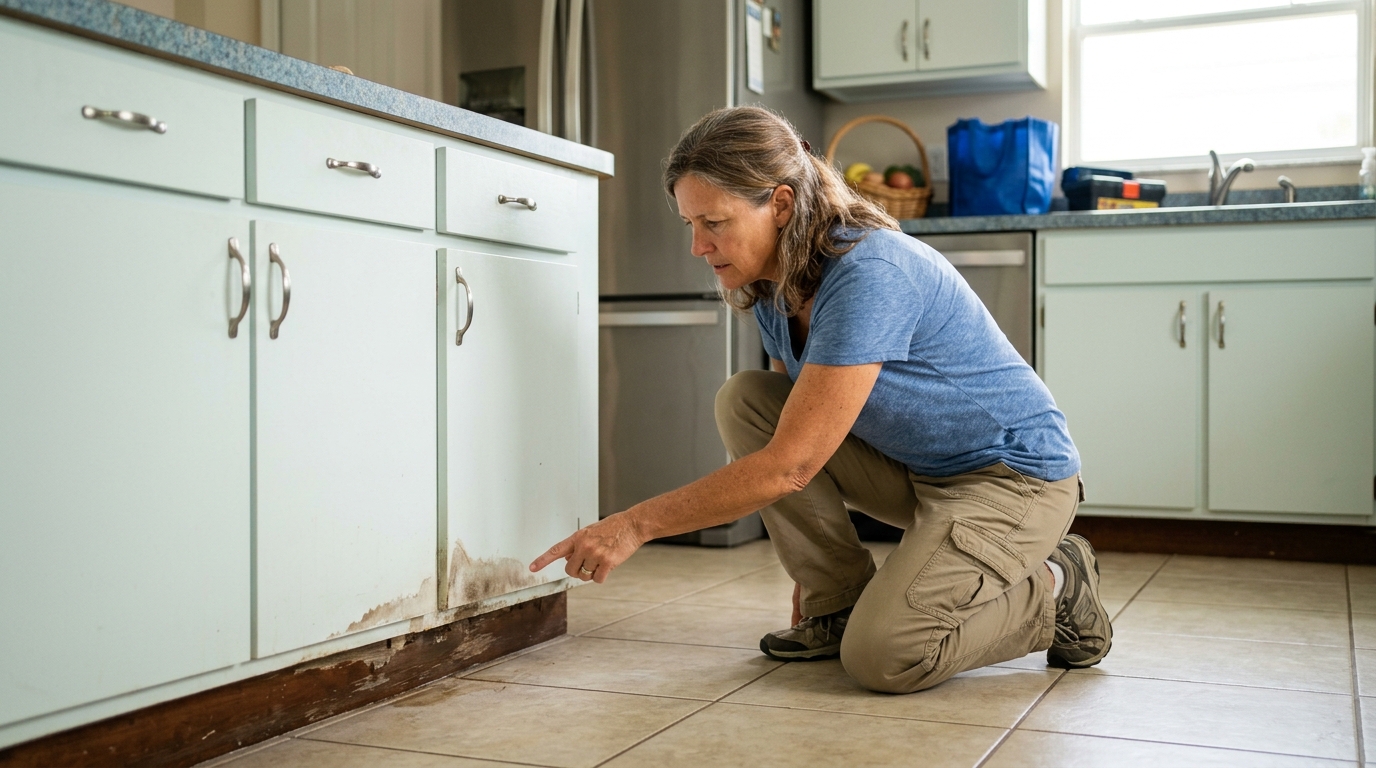
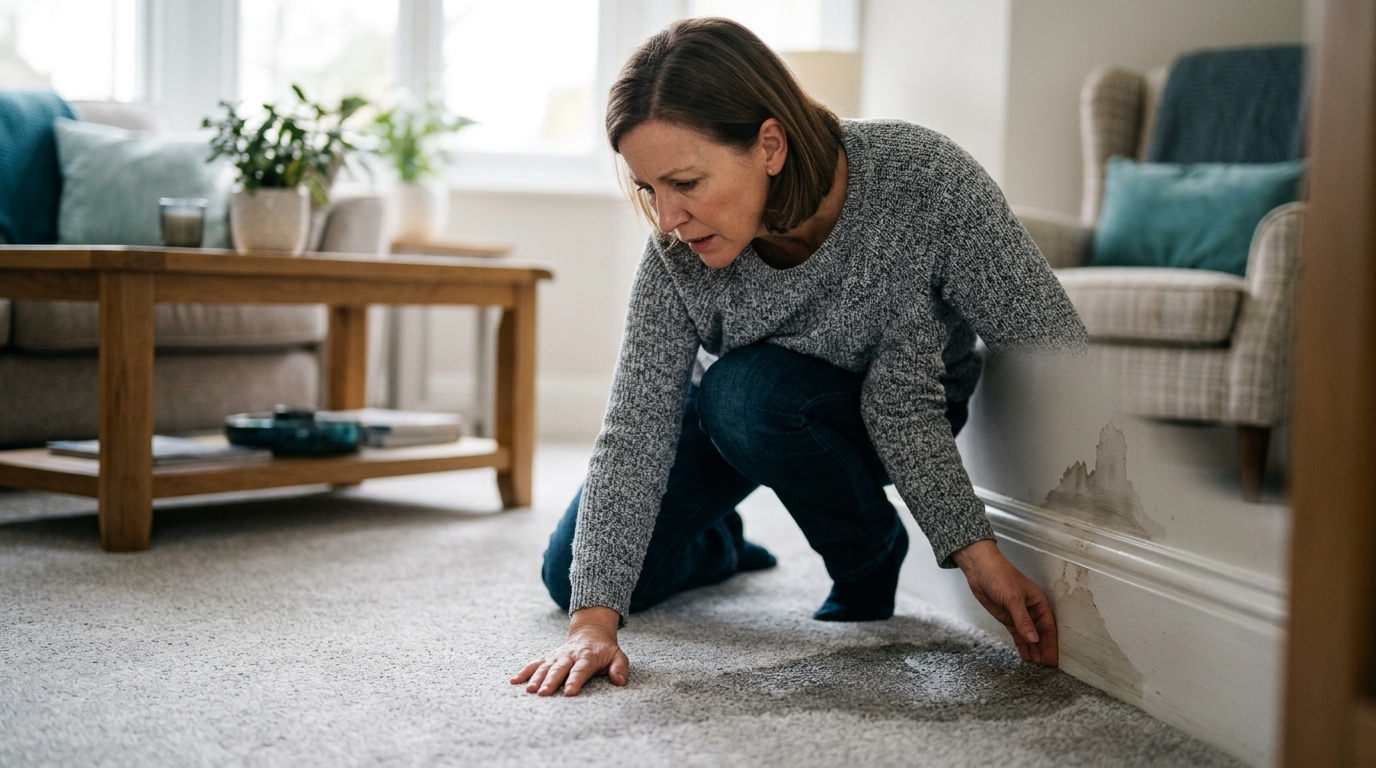
Your AC unit dies in the middle of a Florida summer, and your insurer says it’s not covered. Now you’re stuck with a repair bill and a lot of confusing policy language. If you’ve been searching for a straight answer to “does home insurance cover ac units,” you’re not alone. The truth is more nuanced than most homeowners expect. Here’s what Florida law and your policy actually say about it in 2026.
Does Home Insurance Cover AC Units
Central AC vs. window units: why classification matters
Not all air conditioners get treated the same way on a Florida policy. A central AC system, the kind wired into your home’s ductwork and sitting outside on a concrete pad, usually falls under dwelling coverage or “other structures” coverage. Insurers see it as a permanent fixture attached to the property. A window unit or portable AC, on the other hand, typically gets classified as personal property. That distinction changes your deductible, your coverage limit, and sometimes even whether a claim gets approved at all.
Here’s the practical part: an outdoor condenser damaged by a falling tree limb during a storm gets treated very differently than a window unit knocked off its frame in the same event. Insurers scrutinize location, too. A central unit bolted to a slab qualifies as a structure. A portable unit sitting in a spare bedroom is just… stuff. Adjusters know this distinction cold, and they’ll use it. You should too, before you file.
What counts as a ‘covered peril’ under a typical HO-3 policy
Most Florida HO-3 policies work on a named-peril basis for things like AC units. That means damage has to trace back to a specific, listed cause. Fire, lightning, hail, and wind-driven rain are the usual suspects, and they’re generally covered. So if a hailstorm dents your condenser or lightning fries the compressor, you likely have a claim. Wind ripping the unit off its pad during a hurricane? Same story, though you’ll want to understand florida hurricane claims understanding coverage limitatio… since wind and flood get treated very differently on the same policy.
What’s not covered matters just as much. Normal wear, rust, mechanical breakdown, and neglect are standard exclusions. If your unit dies because a refrigerant line corroded over ten years, that’s maintenance, not a covered loss. And remember, flood damage from rising water needs a separate flood policy entirely. For a broader rundown, resources like Does home insurance cover AC cover these basics well. Denied claims sometimes involve recognizing bad faith tactics by insurance companies, particularly when wear-and-tear gets blamed for what was really storm damage.
How Dwelling Coverage Treats Built-In HVAC Systems
Actual cash value vs. replacement cost payouts
Your central air handler and the condenser sitting outside on its concrete pad are usually built into your policy under Coverage A, the dwelling itself. If that condenser sits detached from the house, some insurers shift it to Coverage B, other structures. Either way, it’s treated as part of your home’s physical structure, not as personal belongings. That distinction matters when a claim gets filed, because the paperwork and payout math differ depending on which bucket the adjuster assigns it to.
Coverage only kicks in when the damage is sudden and accidental. A tree limb crashing onto your condenser during a storm? Covered. A unit that’s been leaking refrigerant for two years and finally quits? Not covered. Insurers draw a hard line between an event and a slow decline, and that line decides whether you get a check or a denial letter. Learning how to get home insurance to pay for your air conditioner often starts with proving exactly which category your damage falls into.
Then there’s the payout itself. Replacement cost value pays what a new comparable unit costs today. Actual cash value subtracts depreciation first. A 12-year-old system with a 15-year expected life might get valued at pennies on the dollar, even though replacing it costs full price. Age drives the depreciation formula, and insurers lean on it hard. Many homeowners learned this the hard way during floridas hurricane ian recovery six months later, when older units took heavy losses but yielded thin settlements.
Window and Portable Units Under Personal Property Coverage
A window unit or a portable AC you rolled in from the store isn’t part of your house. It’s your stuff. That’s the key distinction insurers make, and it matters. These units typically fall under Coverage C, or personal property coverage, rather than dwelling coverage. Personal property limits usually run as a percentage of your dwelling coverage, often 50-70%, and that limit has to stretch across everything you own, from furniture to electronics to that AC unit sitting in your window.
Theft or vandalism of a portable unit can be covered, but don’t expect a check to show up without paperwork. You’ll need proof of ownership and a documented value, meaning a receipt, photos, or a serial number on file somewhere. Keep a running inventory of your belongings, including big-ticket appliances like standalone AC units. Without it, you’re negotiating from a weak spot. For a fuller sense of what documentation insurers expect after any loss, 9 tips for assessing property damage for insurance claims covers the basics well.
Renters and condo owners lean on this coverage far more than typical single-family homeowners do, since they often own every AC unit in the place outright. Water intrusion around a poorly sealed window unit can also invite mold, which is its own headache; see the unseen impact how mold damage affects your property value for more on that risk.
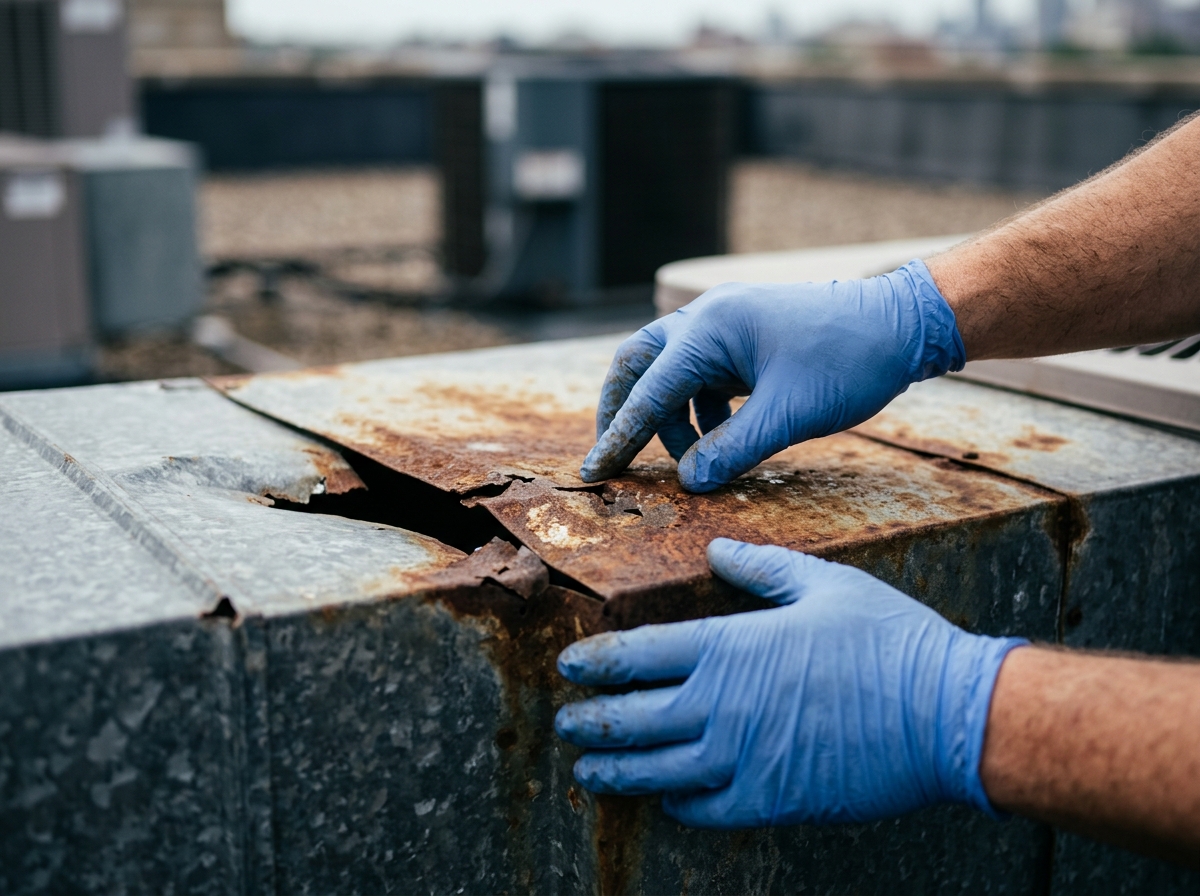
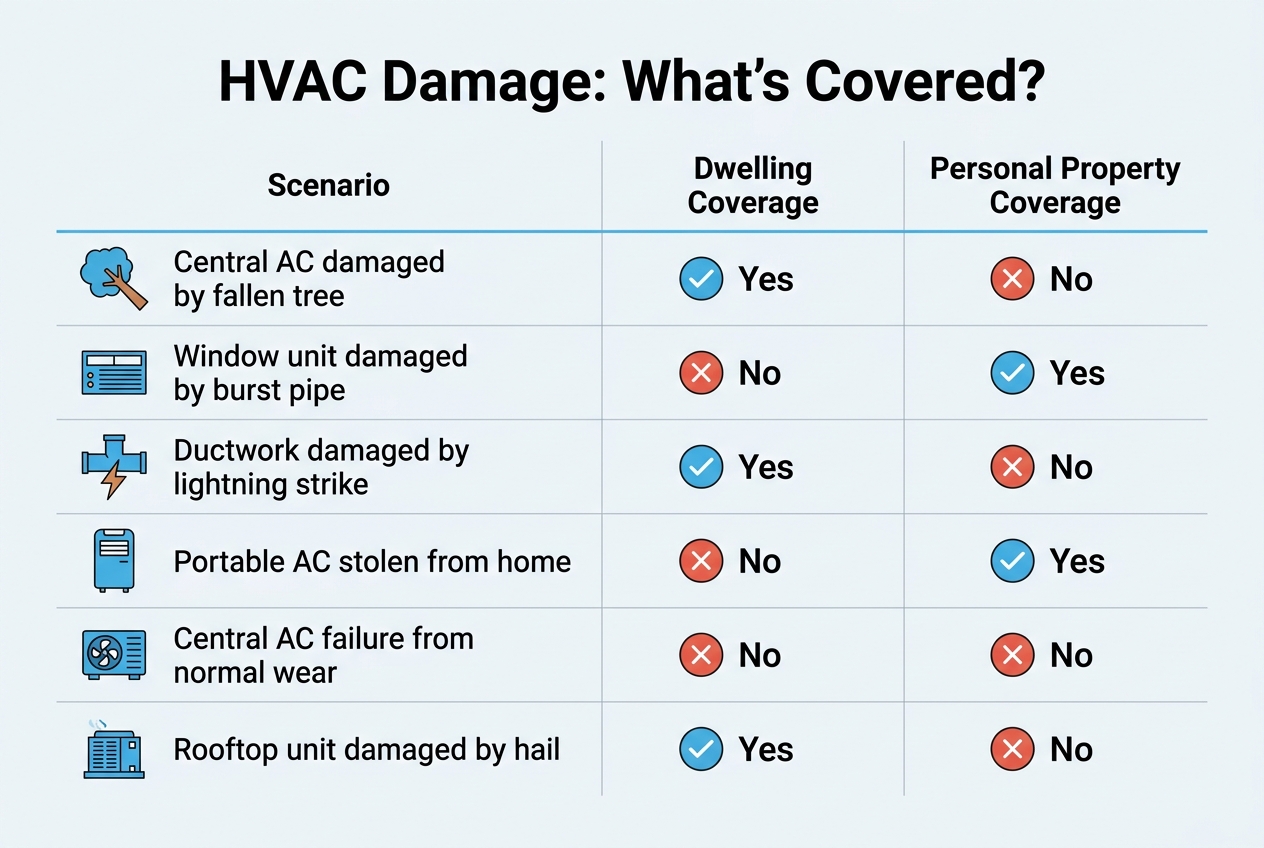
Comparing Coverage Scenarios for HVAC Damage
Not every broken AC story ends the same way. The cause of the damage decides everything. Here’s how six common scenarios usually shake out under a standard Florida homeowners policy.
| Cause of Damage | Typical Coverage Outcome | Why |
|---|---|---|
| Lightning strike frying the compressor | Typically covered | Named peril under standard dwelling coverage |
| Wind-blown debris denting the condenser | Typically covered | Wind damage is a covered peril, minus your deductible |
| Compressor failure from age or poor maintenance | Not covered | Treated as wear and tear, not sudden loss |
| Flood water submerging the outdoor unit | Not covered | Requires a separate flood insurance policy |
| Theft of a window unit | Covered under personal property | Subject to your policy’s deductible |
| Slow refrigerant leak causing gradual damage | Not covered | Considered gradual deterioration, not a sudden event |
Notice the pattern? Sudden and accidental wins. Slow and preventable loses. That’s the line insurers draw again and again, and it’s the same logic behind many reasons water damage insurance claims get denied in florida. A pinhole leak that drips for months gets treated like neglect, even if you never noticed it.
Here’s the catch with flood and slow leaks: they often invite secondary problems. A submerged unit or hidden moisture can lead to mold, and that’s a separate fight entirely, one covered in depth in resources on mold insurance claims protecting your home and health in… after storm damage.
When Equipment Breakdown Coverage Fills the Gap
Is equipment breakdown coverage worth adding in Florida?
Here’s the thing most homeowners never learn until it’s too late: a standard policy pays for damage tied to a named peril, like fire or a windstorm. It usually won’t pay when your AC’s compressor just dies from a power surge or a motor burns out on its own. That’s where equipment breakdown coverage steps in. It’s an optional endorsement built specifically for mechanical or electrical failure that has nothing to do with a covered event. Think of it as insurance for your system breaking down from the inside, not from a storm hitting it from the outside.
In Florida, this matters more than you’d expect. Lightning strikes and grid instability during storm season cause plenty of electrical arcing and surge damage every year. Without this rider, you’re paying full price for a new condenser or air handler out of pocket. For a rough sense of what’s typically excluded and why, this breakdown of Does Homeowners Insurance Cover Broken HVAC? is worth a look before you assume you’re covered.
Most HO-3 policies leave this coverage out entirely. You have to ask for it, and it usually comes cheap compared to the repair bills it prevents. Pull your declarations page and look for the endorsement by name. If it’s not listed, you don’t have it. And if a claim gets denied later, knowing what not to say when filing a home insurance claim in florida can save you a headache during the adjuster’s review.
Common Exclusions That Lead to Denied AC Claims
Most AC denials come down to a handful of repeat offenders. Insurers know their policies well. You should too, before you file. A quick How does home insurance work in terms of my HVAC … search shows homeowners hitting the same walls again and again.
- Wear and tear or age-related mechanical failure — a compressor that finally gives out after 15 years isn’t damage in the eyes of your insurer. It’s just old.
- Lack of routine maintenance, such as skipped filter changes or dirty coils, which insurers argue caused the breakdown rather than a covered peril.
- Manufacturer defects that fall squarely under a warranty claim, not your homeowners policy, no matter how expensive the repair.
- Pest infestation damage, like rodents chewing through wiring, which many policies exclude outright or limit heavily.
- Pre-existing damage not disclosed at policy inception — if the unit was already struggling when you signed up, that’s on you, not the insurer.
- Flood damage without a separate NFIP or private flood policy, since standard homeowners coverage almost never includes flooding.
Some of these overlap with other coverage headaches. Long-term moisture around an outdoor unit, for instance, can raise the same questions covered in guides on does my insurance policy cover mold damage understanding… your limits. Worth a read before you assume the worst.
Steps to Take When Filing an AC Damage Claim
Your AC dies. The claim process starts right then, not next week. How you handle the first 48 hours often decides whether you get paid fairly or spend months fighting for it. There’s a rhythm to doing this right, and skipping steps almost always costs you later.
- Document the damage immediately with timestamped photos, short videos, and written notes describing what you saw, heard, or smelled before the unit failed.
- Get a professional HVAC technician’s assessment that clearly states the cause of failure, whether it’s a covered peril like a lightning strike or something excluded like normal wear.
- Review your policy’s declarations page and endorsements before you call the insurer, so you know your coverage limits, deductibles, and any HVAC-specific language ahead of time.
- File the claim promptly, since most policies set strict reporting windows and missing one can void your claim outright.
- Keep copies of every communication, estimate, and repair invoice, including emails, adjuster notes, and receipts, organized in one place from day one.
- Request a written explanation if the claim is denied or underpaid, since insurers must state their reasoning, and that document becomes crucial if you need to push back.
Timing matters more than most homeowners realize. If you’re unsure about your window, this breakdown of how long do you have to file a property damage claim is worth a read before you assume you have plenty of time. And if you’re still fuzzy on whether HVAC systems even qualify for coverage, Does homeowners insurance cover HVAC units? lays out the basics clearly. Most people skip the paperwork step. It shows up later, when they need proof and don’t have it.
Protecting Your System and Your Claim Before Disaster Strikes
Good documentation wins claims. Bad documentation loses them. That’s the whole game, really, and most homeowners don’t think about it until they’re already fighting an insurer over a denial. A little prep work now can save you weeks of arguing later, especially after a major storm when adjusters are stretched thin and skeptical of every claim that lands on their desk.
- Schedule annual HVAC maintenance through a licensed technician and keep every receipt, since insurers often use “lack of maintenance” as grounds for denial.
- Install hurricane straps, tie-downs, or a protective enclosure around outdoor condenser units if you’re in a wind-prone zone, which many Florida homes are.
- Photograph the unit every year, capturing the model number, serial number, and visible condition, so you have a clear before-and-after record.
- Read your policy closely to understand which perils are named and covered versus which ones are excluded outright, since this varies wildly between carriers.
- Ask your agent directly about adding equipment breakdown coverage or a scheduled personal property rider for extra protection beyond the standard policy.
- Store digital copies of maintenance records and photos somewhere outside your home, like cloud storage, in case the originals are damaged too.
This resource on Does Homeowners Insurance Cover HVAC Issues? offers a useful outside perspective on how carriers typically classify these claims. And if a storm does hit, understanding the process for filing an insurance claim after Hurricane Idalia can give you a practical template for what documentation and timing actually look like in practice.
When an Insurer Wrongly Denies or Underpays an AC-Related Claim
Signs your AC claim denial may not be legitimate
Denials aren’t always what they seem. Insurers sometimes label storm-caused compressor failure or coil damage as “wear and tear,” even when a hurricane clearly triggered the breakdown. That’s a common tactic. If your unit worked fine before the storm and failed right after, wear and tear doesn’t hold up as an explanation. You shouldn’t just accept it at face value.
Underpayment is its own problem. It often stems from depreciation calculations that don’t match your unit’s actual age or condition, or from adjusters who dismiss photos, receipts, and maintenance records without real review. A five-year-old system shouldn’t be valued like it’s fifteen years old. Sloppy documentation review is one of the most fixable, and most common, reasons claims fall short.
Florida homeowners have a right to push back. You can dispute a denial, demand the full policy language be applied, and request a complete review of how the adjuster reached their number. Don’t assume the first answer is final. Many aren’t.
An experienced Florida property insurance attorney can reevaluate the claim file, negotiate directly with the insurer, and pursue bad-faith action when the denial or lowball offer crosses a legal line. This matters most after hurricanes, when insurers face thousands of claims at once and denials get issued in bulk with little individual scrutiny. Before signing with anyone, it’s worth reading about 10 common mistakes to avoid when hiring a property damage… lawyer, since the wrong choice can cost you time and money. A free consultation, meanwhile, can tell you fast whether your denial was justified or simply wrong, and for background on how these policies are supposed to work, this piece on Does home insurance cover HVAC systems? is a useful starting point.
Getting Help With a Denied or Underpaid Claim in Florida
So the insurer denied your AC claim, or paid you a fraction of what repairs actually cost. Now what? You don’t have to accept the first answer you get. Many denials rest on shaky reasoning, misapplied exclusions, or a vague reference to “wear and tear” that doesn’t hold up once someone actually pushes back. A free case evaluation gives you a clear read on where you stand, with no cost and no obligation, before you decide whether it’s worth pursuing further.
If you move forward, a team of managing and associate attorneys takes over the back-and-forth with the insurance company, including the paperwork, the phone calls, and the negotiating. You won’t pay anything unless the case wins — that’s the arrangement, full stop, and it removes the financial risk that keeps a lot of homeowners from disputing a bad outcome in the first place. Most people just accept the check. That’s exactly what insurers count on. For a closer look at how these disputes play out, and what “bad faith” actually looks like in practice, see fighting insurance bad faith in florida a guide to gettin…. It’s also worth reviewing general guidance like Does Home Insurance Cover an AC Unit? to understand baseline expectations before your claim gets more complicated.
These aren’t small numbers, either: over $58,000,000 recovered for clients, more than 3,500 consultations completed, and a team that typically responds within one to two business days. The office sits at 2790 Sunset Point Rd, Clearwater, FL 33759, reachable at +1 727 777 7450 or intake@krapflegal.com.
If your insurer denied or underpaid a claim involving your AC unit or other storm-related damage, you don’t have to navigate that fight alone. Krapf Legal, located at 2790 Sunset Point Rd in Clearwater, FL, has helped thousands of Florida homeowners get their property claims fairly reevaluated, and with over $58,000,000 recovered for clients, they know how to hold insurers accountable. Give them a call at +1 727 777 7450 for a free case consultation, there are no fees unless they win.