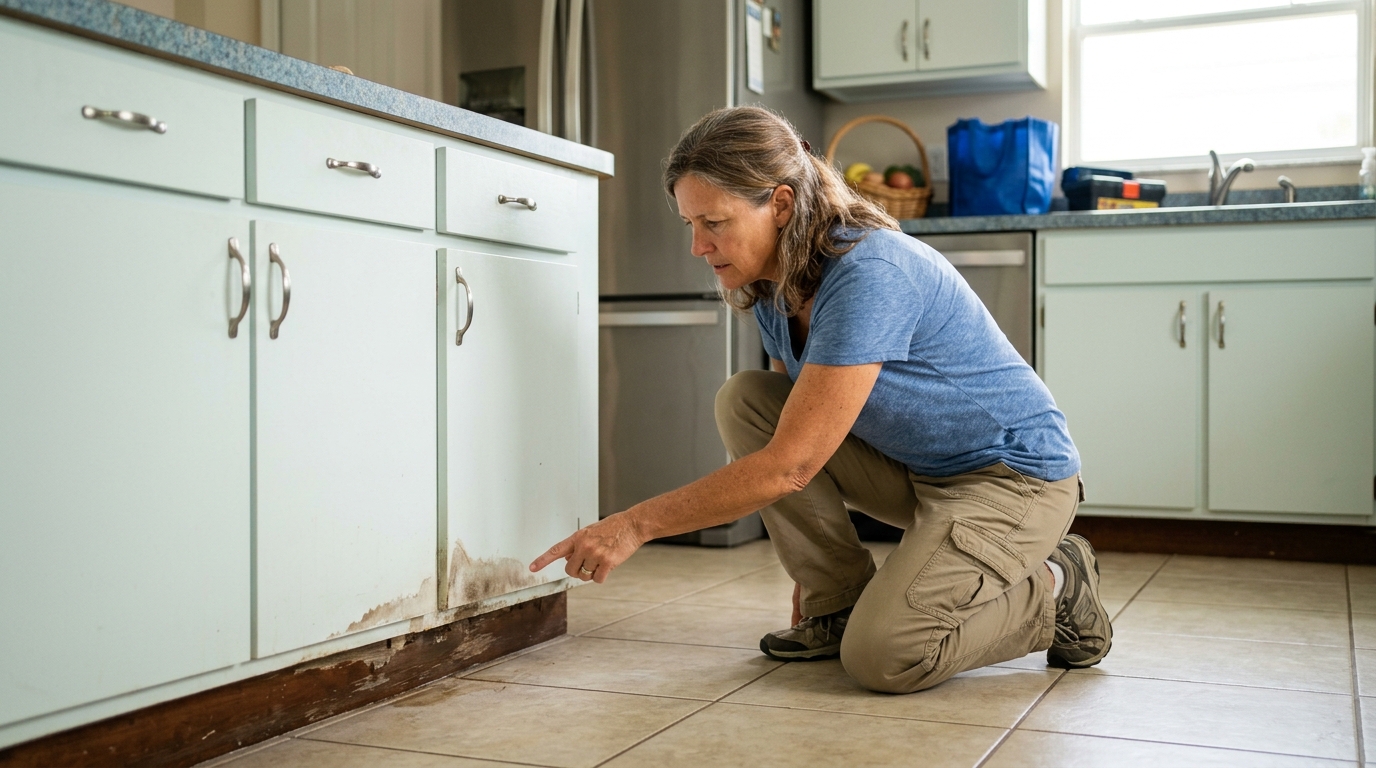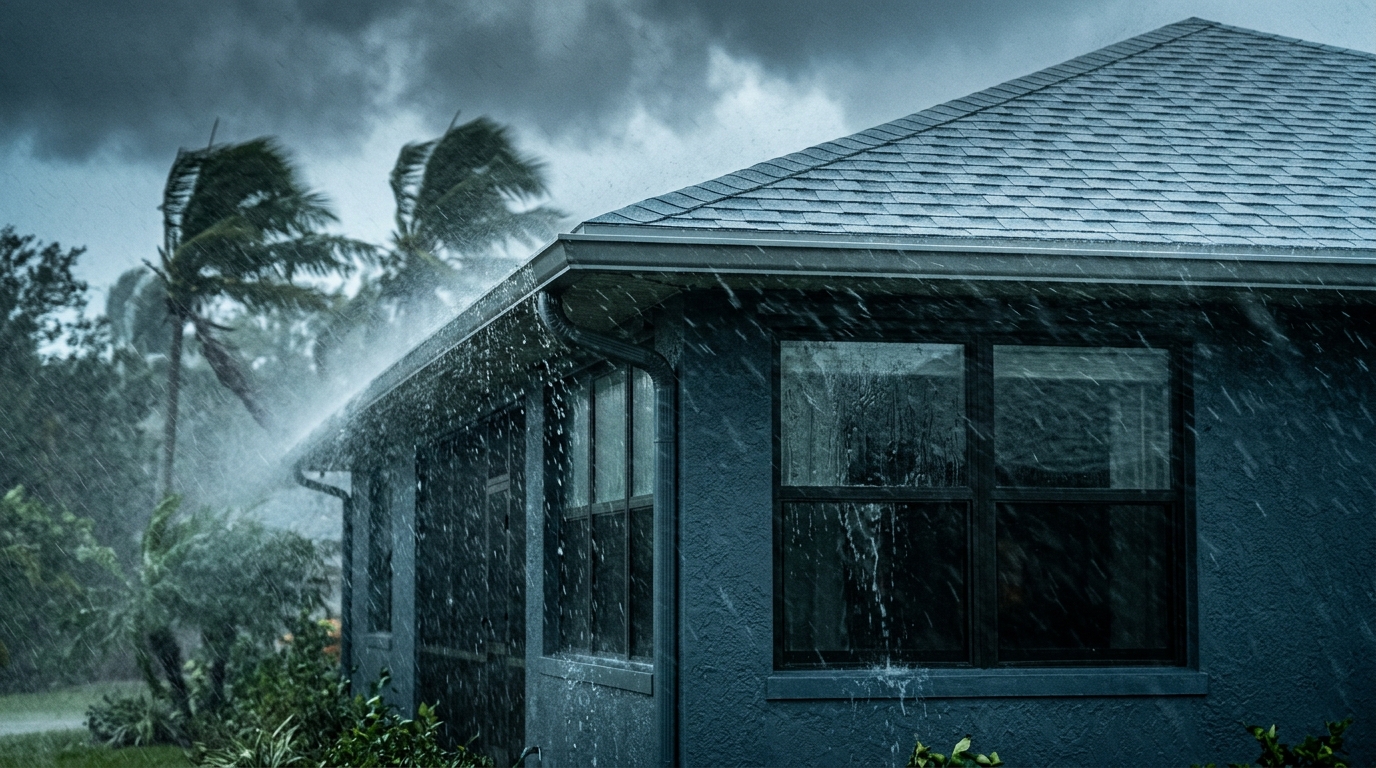
A hurricane rips through your neighborhood. The wind finally dies down, and you find water pooled inside your walls even though your roof never leaked before. Your insurer points to a few words in your policy and denies the claim, blaming driven rain instead of storm damage. That distinction can cost you thousands. Here’s what Florida homeowners need to understand about coverage, exclusions, and how to fight back in 2026.
What Is Driven Rain and Why It Matters for Florida Homes
Wind-Driven Rain vs. Ordinary Rainfall
Picture rain falling straight down. Most homes handle that fine. Now picture that same rain pushed sideways at 60, 80, even 100 miles an hour, slamming into walls, soffits, and window seams at an angle no roof was designed to shed. That’s wind-driven rain, and it behaves nothing like a normal afternoon shower. It finds nail holes, hairline cracks, worn flashing, and gaps around windows that ordinary rainfall would simply never reach.
A well-maintained structure is built to resist water falling from above, not water attacking horizontally. That’s the whole distinction. Ordinary rain relies on gravity and a functioning roof system to stay outside. Wind-driven rain relies on pressure, and pressure has a way of finding the weakest point in a building envelope, whether that’s a cracked tile, an aging window seal, or a soffit vent nobody’s inspected in a decade.
Florida sees this pattern constantly. Hurricanes, tropical storms, and even fast-moving summer squalls off the Gulf routinely push rain sideways for hours at a time. Coastal exposure means many homes face this several times a season, not once a decade.
Why This Distinction Drives Claim Disputes
Here’s where things get messy. Insurers know that wind damage is typically covered, while plain “rain damage” often isn’t, especially once water gets inside through an opening that existed before the storm. So adjusters frequently try to reclassify a wind-driven rain loss as ordinary rain intrusion or, worse, as a maintenance issue the homeowner should’ve caught. That reclassification can be the difference between a paid claim and a denied one.
This isn’t always an honest mistake. Learning to spot recognizing bad faith tactics by insurance companies helps homeowners understand why some denials arrive suspiciously fast, with little real inspection behind them. The dispute usually hinges on one question: did wind create or worsen the opening that let the rain in? Insurers argue no. Policyholders, and the engineers who inspect the damage, often find otherwise.
For homeowners weighing whether their location makes this risk worse, it’s worth understanding regional patterns. Research into the safest place in florida from hurricanes shows exposure varies significantly by county and coastline. That variation matters when insurers start arguing over cause of loss. It’s rarely a simple fight. Get ready for it anyway.
How Driven Rain Damages Roofs, Walls, and Interiors
Common Entry Points During a Storm
Wind doesn’t just push rain sideways. It shoves water into any gap it can find, and Florida roofs have more gaps than most homeowners realize. Shingle laps, flashing seams around chimneys and skylights, roof vents, soffit joints, and window or door seals all become pressure points once gusts climb. Once wind pressure builds against a wall or roof plane, water stops running off and starts getting forced into the structure instead. That’s the basic mechanics behind most storm intrusion claims, and it’s exactly the scenario detailed in Wind Driven Rain – Allstar Underwriters.
Here’s the part people miss: the damage often starts before a drop of rain even lands. Repeated cyclic wind loading — that back-and-forth flexing during hours of sustained gusts — loosens nails, cracks sealant, and lifts shingle tabs well before the rain arrives in force. By the time the storm peaks, the roof’s defenses are already compromised. It’s fatigue damage, not a single blow.
Soffits and vents deserve extra attention. They’re designed for airflow, not water resistance, which makes them a favorite entry point once wind direction shifts during a storm’s passage.
When Driven Rain Causes a Hidden Roof Leak
Water rarely drips straight down from where it enters. It travels along rafters, follows wall cavities, and pools in spots far from the original breach. You might see a stain in a bedroom closet that traces back to a vent three rooms away. That lag — sometimes days or weeks — is exactly why documenting the timeline matters, and why how to maximize a water damage claim often hinges on catching the pattern early.
This is where things get messy for claims. A roof can leak from driven rain with zero visible exterior damage. No missing shingles, no cracked tiles, nothing an adjuster can photograph from the ground. Insurers sometimes seize on that absence to argue the damage predates the storm or resulted from poor maintenance. It’s a convenient argument. It’s also often wrong.
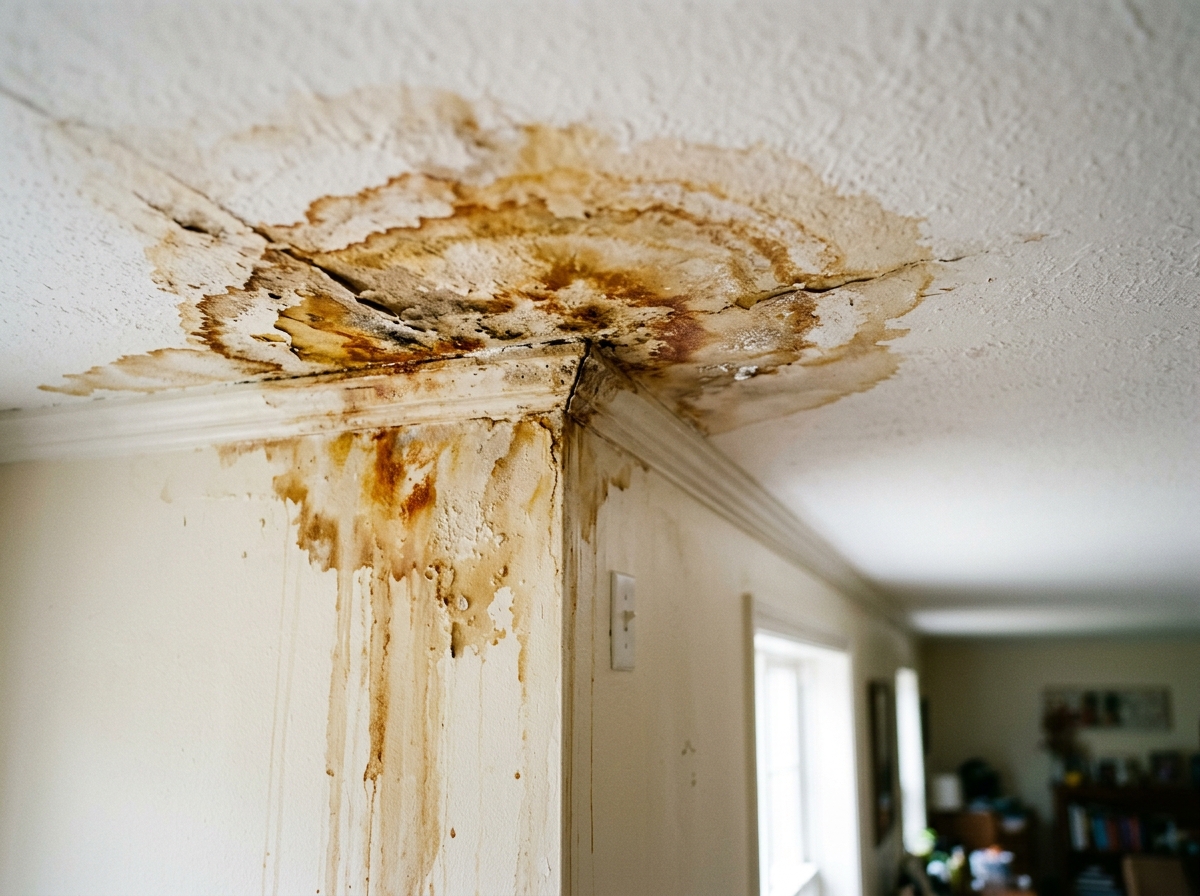
Left unaddressed, hidden moisture doesn’t stay hidden for long. Drywall warps, insulation turns to mush and stops insulating, and wiring near the intrusion point can become a real electrical hazard. The longer water sits inside a wall cavity, the worse and more expensive the fallout gets — a pattern that played out repeatedly in the months chronicled in floridas hurricane ian recovery six months later.
Does Florida Homeowners Insurance Cover Driven Rain Damage?
Here’s the short answer: it depends on your policy’s exact wording. Florida policies typically distinguish between ordinary “rain” damage, which is often excluded, and damage that starts with wind. That distinction decides whether your claim gets paid or denied. Homeowners are often surprised to learn that two neighbors with similar damage can get opposite results, simply because their carriers use different policy forms. If you want to understand how this plays out in real disputes, reading through a ‘Wind-Driven’ Rain Exclusion : r/Insurance thread shows just how often adjusters and policyholders disagree on the same facts.
The ‘Wind Created an Opening’ Coverage Rule
Most Florida policies cover wind-driven rain only if wind physically damaged the structure first — a torn shingle, a broken window, a lifted flashing seam. Rain that seeps in through worn caulking or an aging roof, with no wind damage involved, usually isn’t covered. The order of events matters more than the amount of water.
Common Reasons Insurers Deny These Claims
Insurers look hard for reasons to shift blame away from wind. Knowing their typical arguments helps you push back with evidence instead of guesswork.
- Claiming the damage stems from long-term wear or deferred maintenance rather than a single storm event, which shifts the loss outside covered perils entirely.
- Arguing the roof already had pre-existing leaks, so any new water intrusion just “found” an old weak point instead of a fresh wind-created opening.
- Pointing to a separate, unrelated plumbing or condensation leak to muddy the cause-and-effect timeline between the storm and the interior damage.
- Applying a named storm deductible or a separate hurricane deductible, both of which can run 2% to 10% of dwelling coverage and dramatically shrink the payout.
- Acknowledging coverage exists but lowballing the repair estimate, betting you won’t push back on the numbers.
- Disputing the scope of interior damage, arguing water only reached a small area when it actually spread through insulation and drywall.
Even acknowledged claims often get underpaid, which is why so many homeowners end up negotiating twice — once for coverage, once for the correct amount. Anyone dealing with hurricane-related disputes should also review the specifics of florida hurricane claims understanding coverage limitations for wind versus flood damage, since misclassifying the cause of loss is one of the most common denial tactics. Deductible math alone can turn a $20,000 estimate into a $4,000 check. That gap is exactly where disputes start.
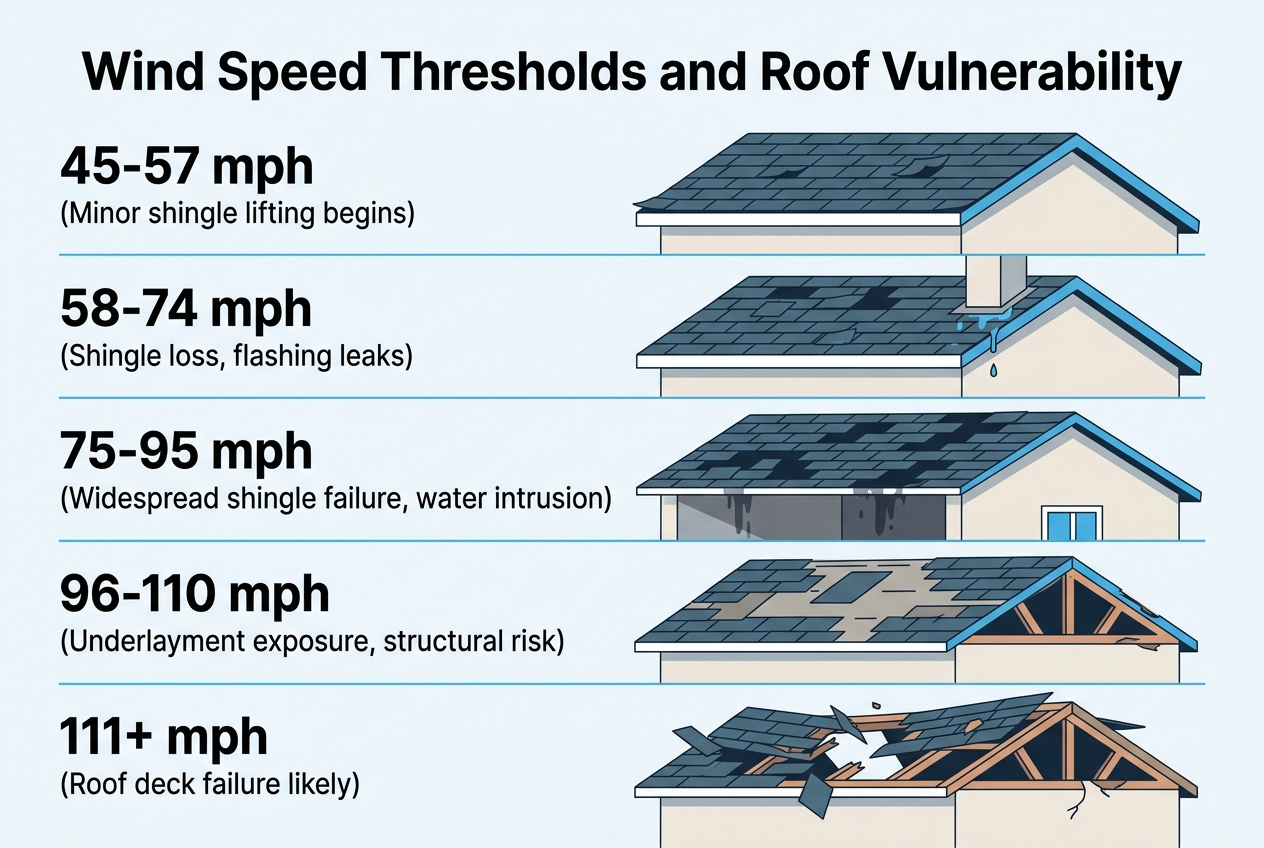
Wind Speed Thresholds and Roof Vulnerability
Wind doesn’t need to be a hurricane to hurt your roof. Once sustained gusts pass 45-50 mph, shingle edges start lifting and sealant strips begin to fail. That’s often the moment driven rain finds its way underneath. By the time you reach Category 1 hurricane force, 74-95 mph, flashing can pull loose and whole shingle courses can peel back, opening a straight path for water to reach the decking.
Not every roof fails at the same speed, though. Age, material, and installation quality shift the threshold a lot, and insurers know it. That’s exactly why understanding wind damage to roof shingles matters before you ever file a claim.
| Roof Condition | Approximate Failure Threshold | Common Insurer Concern |
|---|---|---|
| New architectural shingles, proper install | 90-110 mph | Low scrutiny, minimal depreciation |
| 10-15 year old shingles, adequate maintenance | 70-90 mph | Moderate depreciation applied |
| 20+ year old shingles | 50-70 mph | Heavy scrutiny, wear-and-tear disputes |
| Improperly nailed or under-fastened roofs | Below 50 mph | Installation defect claims, coverage denial risk |
| Missing or damaged flashing | 45-60 mph | Pre-existing damage arguments |
That last row is where most disputes start. Insurers love to argue damage was already there. Pulling NOAA or National Weather Service wind data for the exact date and location of loss can shut that argument down fast. Pair that data with clear photos, and you’ve got a real record, not just a guess. Following solid tips for assessing property damage for insurance claims right after a storm makes that documentation far easier to compile later.
Can Driven Rain Lead to Mold and Long-Term Property Issues
Why Mold Claims Often Get Denied or Reduced
Water that sneaks past a window seal or soaks into an attic doesn’t just sit there quietly. Once it’s trapped inside wall cavities or insulation, mold can start forming in as little as 24 to 48 hours. That’s a brutal timeline. It means the gap between the storm and your first phone call to the insurer really matters, because by the time an adjuster shows up, spores may already be spreading behind the drywall where nobody can see them.
Here’s the part that catches people off guard: mold usually isn’t treated as an extension of the water damage claim. Many Florida policies carve out separate provisions, sublimits, or flat exclusions for fungus and mold, sometimes capping payouts at a few thousand dollars regardless of what the rest of the claim covers. Reading a policy’s fine print on this point — or having someone else read it for you — is worth doing before you assume everything’s included under one payout. In fact, learning whether your policy actually covers mold damage should happen early, not after a denial letter arrives.
Delays make it worse on both fronts. If an insurer drags out the inspection, or disputes the cause of loss while mold keeps growing, you end up with a bigger remediation bill and a tougher health situation. Adjusters know this. Some will point to visible mold growth and argue it resulted from your delay in drying the property, not from the storm itself — shifting blame instead of paying the claim. It’s a convenient argument, and not always a fair one. Careful, timestamped documentation of moisture readings, photos, and mitigation steps taken right after the storm is what separates a valid claim from one an insurer can pick apart; understanding how to protect your home and health after mold exposure can guide those early decisions before an adjuster ever walks through the door.
Preventing and Minimizing Driven Rain Intrusion
You can’t stop a hurricane. But you can make your house a lot harder for wind-driven water to break into. Most intrusion problems trace back to a handful of weak points — windows, roofing, siding, and drainage — that get overlooked until a storm finds them for you. The good news? Fixing those weak points now is far cheaper than fighting over a soaked ceiling later. Understanding wind vs water damage insurance distinctions also matters here, since the cause of loss often shapes how prevention efforts get credited during a claim.
A few upgrades do most of the heavy lifting:
- Install impact-rated, storm-rated windows and doors with reinforced seals and gasketing designed to resist water penetration under sustained wind pressure.
- Upgrade roof underlayment and flashing to secondary water barrier standards, so a lost shingle doesn’t mean an immediate leak.
- Seal soffits, vents, and roof penetrations with storm-grade sealants, since these small gaps are where driven rain sneaks in first.
- Choose wind-and-rain resistant siding, stucco, or fiber-cement materials over products prone to cracking or warping under repeated moisture exposure.
- Maintain gutters and downspouts to redirect water away from vulnerable wall sections, preventing pooling that pushes moisture into siding and foundations.
- Schedule annual roof inspections before hurricane season to catch early vulnerabilities while they’re still cheap, simple fixes.
Skip that inspection and you’re gambling. It’s a bet a lot of homeowners lose every June. For a deeper look at how wind-blown water actually defeats these defenses, Wind-Driven Rain: What Is It and Does Your Insurance … breaks down the mechanics worth understanding before storm season arrives.
Comparing Storm-Resistant Building Materials and Window Options
Not every upgrade is created equal, and some cost a lot more than they’re worth in actual protection. Before you spend a dime, it helps to know which products actually stop water from getting pushed sideways through your walls during a gale, and which ones just sound impressive. Impact windows sit at the top for a reason: they’re rated to resist both wind pressure and the water that rides in behind it.
| Product | Protection Level | Typical Cost | Insurance Discount Potential |
|---|---|---|---|
| Impact windows | High | $$$-$$$$ | Often significant |
| Standard windows | Low | $ | None |
| Accordion shutters | Moderate-High | $$ | Moderate |
| Roll-down shutters | High | $$$ | Moderate-High |
Metal roofing generally beats asphalt shingles and even tile when it comes to shedding wind-driven rain, mostly because there are fewer seams and lap points for water to force its way under. Asphalt shingles are cheapest upfront but tend to lift at the edges in sustained wind, which is exactly where leaks start. Tile looks great and lasts decades, but individual tiles can crack or blow off, opening gaps. Metal roofs typically last 40-70 years versus 15-20 for asphalt. If you’re weighing a full roof replacement, learning how to ensure your home is protected against wind damage before you sign a contract can save you from a costly do-over.
Window and Shutter Options Ranked by Protection
Fiber-cement and brick siding hold up far better than vinyl in a sideways downpour. Vinyl can warp, crack, or pull away from fastening points, creating openings water exploits fast. Fiber-cement resists moisture and won’t rot. Brick, paired with proper flashing, is close to the gold standard. None of it is foolproof, though — the science behind Wind intrusion shows even well-built walls can trap moisture if ventilation details are wrong. In coastal counties, insurers increasingly factor material choice into underwriting, so upgrading can lower premiums and improve your odds during a future claim.
What to Do When Your Storm Damage Claim Is Denied or Underpaid
A denial letter isn’t the end of the road. It’s often just the opening move. Insurers know most homeowners won’t push back, so a lowball offer or outright denial is sometimes a business decision, not a fair reading of your policy. Before you sign anything or accept a check, there are concrete steps that put you back in control.
- Document all damage immediately with timestamped photos, video walkthroughs, and moisture readings in every affected room before any repairs begin, since drying out a wall erases the proof you’ll need later.
- Request a full copy of the insurer’s inspection report and the written denial letter, spelling out the exact policy language they’re relying on to deny or reduce your payout.
- Obtain an independent contractor or engineer estimate so you have a real number to compare against an adjuster’s valuation, especially when repair costs seem suspiciously low.
- Know Florida’s claim-filing deadlines and prompt notice requirements, since missing a window can forfeit rights you’d otherwise have, even on a legitimate loss.
- Watch for patterns of unreasonable delay, shifting explanations for denial, or documentation that seems to vanish from the file, all classic markers of mishandling.
- Get a free case evaluation from an attorney before you accept any settlement offer, so you know what the claim is actually worth first.
Signs Your Insurer May Be Acting in Bad Faith
Some denials are honest mistakes. Others follow a pattern. If your insurer keeps changing its reason for denying the claim, drags out the investigation for months, or ignores the moisture readings and photos you submitted, that’s not sloppy work — that’s a strategy. Florida law has a name for it: bad faith. Reviewing what to do if your property insurance claim is wrongfully denied can help you spot these red flags before more time slips away.
How an Attorney Can Strengthen a Denied or Underpaid Claim
An attorney brings leverage you don’t have alone: policy expertise, access to independent experts, and a track record of pushing insurers to the table. They’ll handle the paperwork, the deadlines, and the back-and-forth, while building a record strong enough to support litigation if it comes to that. Many claims involving roof failures also raise questions about intrusion prevention, and learning about preventing wind-driven rain in commercial buildings can clarify whether your insurer’s causation argument even holds up.
Getting Help With a Denied Driven Rain Claim in Florida
Why Policyholders Choose Krapf Legal for Storm Damage Claims
When a driven rain claim gets denied, you need someone who’s handled the specific fight you’re facing. A dedicated provider working across water, roof, hurricane, mold, and fire damage claims brings pattern recognition to your case — they’ve seen the same denial language, the same lowball estimates, the same stalling tactics, over and over. That familiarity matters more than people expect. Understanding Driving Rain as a distinct peril from wind-driven flooding is exactly the kind of technical detail that separates a strong appeal from a weak one.
Cost stops most homeowners from even calling a lawyer. That’s the wrong instinct here. No fees unless the case wins removes the financial risk entirely, and a free consultation means you can get a straight answer — good or bad — before spending a dime. Call (727) 777-7450 or email intake@krapflegal.com and you’ll get a real evaluation, not a sales pitch. The office sits at 2790 Sunset Point Rd, Clearwater, FL 33759, but the work covers homeowners statewide, from the Panhandle to the Keys.
Numbers tell part of the story: over $58,000,000 recovered, more than 3,500 clients consulted. A team of managing and associate attorneys keeps communication fast, with responses within one to two business days — no vanishing into a call queue. And when insurers just won’t budge on a fair number, bad-faith litigation becomes the next step, holding the company accountable for how it handled your claim, not just what it paid.
If wind-driven rain has left you dealing with a denied or underpaid claim, you don’t have to sort it out alone. The team at Krapf Legal, based right on Sunset Point Rd in Clearwater, has helped thousands of Florida homeowners push back against insurers and recover the compensation they’re owed, with no fees unless they win. Give them a call at +1 727 777 7450 or reach out to intake@krapflegal.com to schedule a free consultation and find out where you stand.