Your roof is torn open, your claim’s been lowballed, and your insurer keeps stalling while the damage gets worse. You’re not imagining it. Insurance companies routinely underpay Florida hurricane claims, banking on homeowners giving up before they get what they’re owed. This guide breaks down exactly how hurricane damage lawyers force insurers to pay fair value in 2026, and how Krapf Legal can help you get there.
Why Hurricane Claims Get Denied or Underpaid
The Adjuster’s Role in Claim Outcomes
Here’s something most homeowners don’t realize: the adjuster who inspects your roof works for the insurance company, not for you. Their job is to close the file efficiently. Efficiently often means cheaply. That’s not always malice — it’s just how the incentive structure works. Many adjusters handle dozens of claims a week after a major storm. A five-minute walkaround can decide whether you get a fair settlement or a fraction of what repairs actually cost.
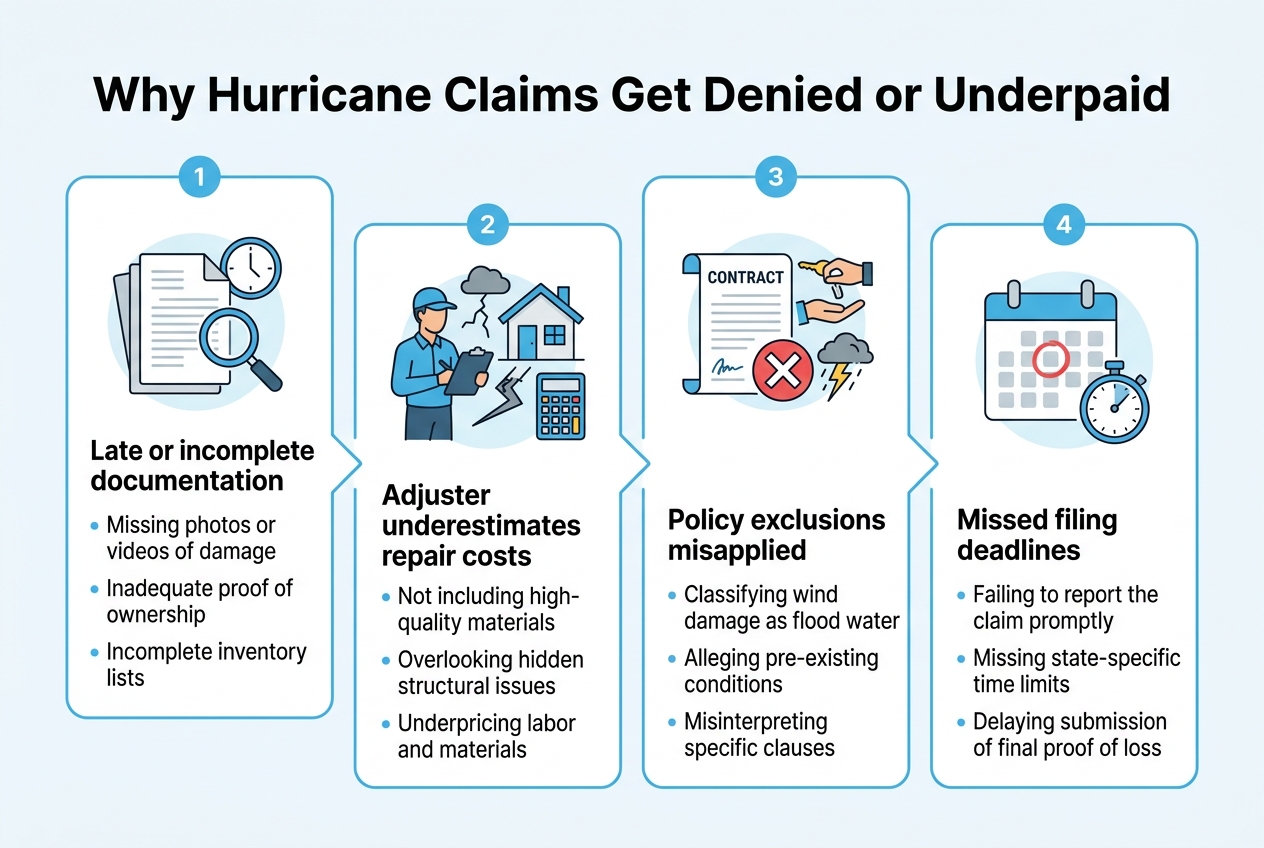
Common denial reasons follow a predictable pattern. Insurers point to pre-existing damage, arguing your roof was already worn before the storm. They cite missed deadlines, since Florida policies impose strict windows for reporting and documenting loss. And they lean heavily on wind-versus-flood disputes, which we’ll get into below. If you’re curious about the specific arguments insurers use most often, it helps to review why wind damage insurance claims get denied in florida before you file an appeal.
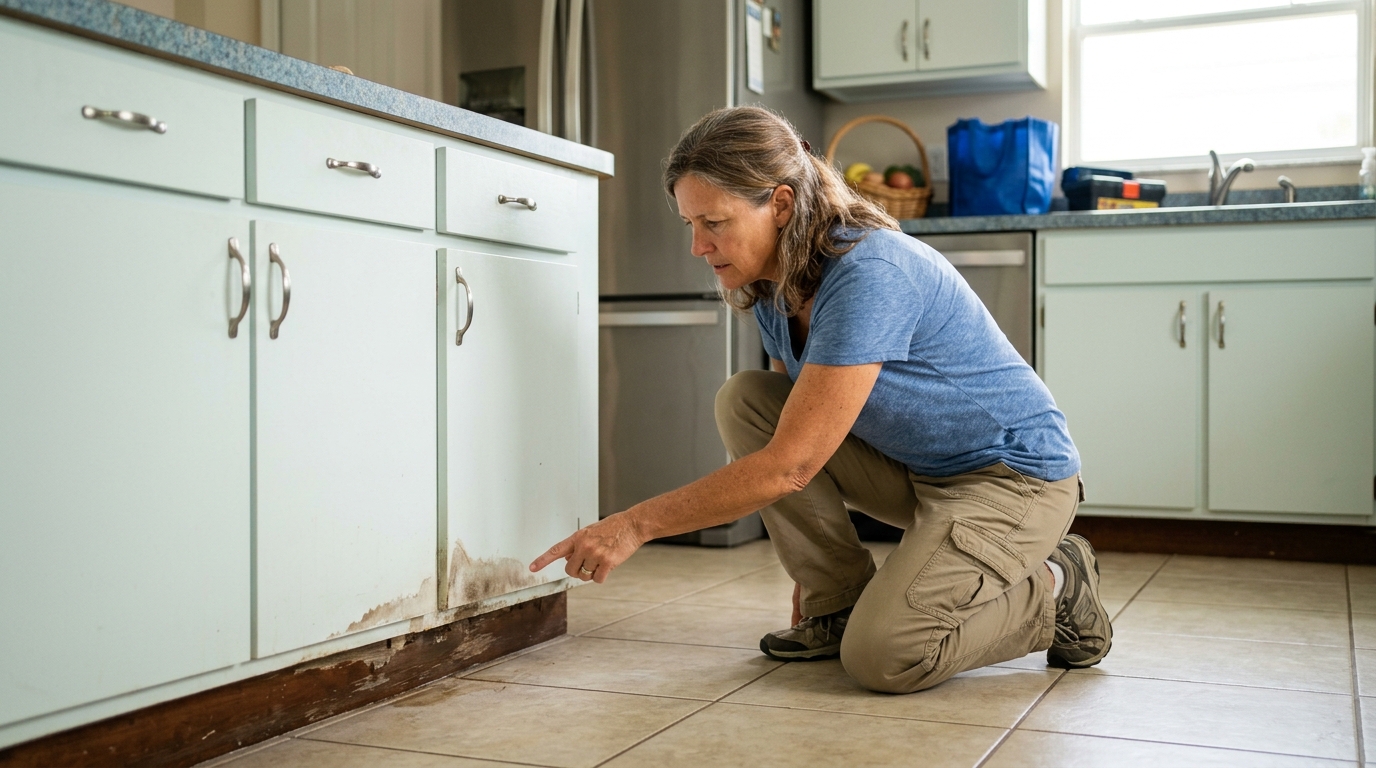
Underpayment is quieter than denial, and arguably more common. A lowball estimate might account for visible shingle loss but ignore hidden structural damage, mold growth behind drywall, or compromised trusses. That’s why mold insurance claims and roof damage claims so often surface months after the initial payout was already spent on partial repairs.
Wind-Driven Rain vs. Flood Exclusions
Florida hurricanes bring both wind and water, and insurers use that overlap to their advantage. Standard homeowners policies typically cover wind-driven rain that enters through a storm-created opening, like a torn-off shingle or broken window. Flood damage, though, usually falls under a separate flood policy entirely. When water pools on your floors, the insurer’s first move is often to blame flooding, not wind, even when the timeline clearly points to storm-created entry points.
This is where policy language gets deliberately murky. Terms like “direct physical loss,” “surface water,” and “wind-driven rain” sound technical, but they carry huge financial weight. A poorly worded claim response can shift thousands of dollars of damage from a covered peril to an excluded one. Understanding most common home insurance claims disputes gives you a baseline for spotting when an insurer is stretching definitions to avoid paying.
Bad-faith claims sometimes grow directly out of this ambiguity, when an insurer knowingly misclassifies damage to dodge a payout. Fire damage attorneys and hail damage claims specialists see similar tactics: reclassify the cause, minimize the scope, hope the homeowner doesn’t push back. Most don’t. That’s exactly the problem.
When Do You Actually Need Hurricane Damage Lawyers
Signs Your Claim Is Being Mishandled
Not every claim needs a lawyer. But certain patterns are red flags, and once you spot them, waiting rarely helps your case. If any of the following sound familiar, it’s time to get a second opinion.
- Your claim was denied outright with a vague letter citing “insufficient evidence” or policy exclusions that don’t actually apply to your damage.
- The settlement offer lands thousands below what licensed contractors quoted for repairs, and the adjuster won’t explain the gap.
- The insurer stops responding to calls or emails for weeks at a time, or keeps requesting the same documents you’ve already sent twice.
- You suspect bad-faith handling, such as an adjuster pressuring you to sign a quick settlement before damage has even been fully assessed.
- Your claim involves multiple types of damage stacked together, like a compromised roof, standing water, and hidden mold growth behind drywall.
- The insurer’s own inspector’s report contradicts what you can plainly see, and photos or independent estimates aren’t changing their position.
That last scenario deserves extra attention. A denied hurricane damage insurance claim often hinges on paperwork technicalities rather than the actual condition of your home. Mixed-damage cases are especially tricky, since mold claims carry their own documentation rules; mold insurance claims what you need to know is worth understanding before you accept any offer tied to water intrusion. When damage types overlap, insurers sometimes lowball one category to offset another. That’s not an accident. It’s a negotiating tactic, and you shouldn’t have to out-negotiate your own insurer alone.
What Hurricane Damage Lawyers Actually Do
From Consultation to Resolution
It starts with the policy itself. A thorough review means reading the fine print on coverage limits, exclusions, and deadlines that most homeowners never bother to open until disaster hits. That review often reveals money left on the table — a roof endorsement that was never applied, or a sublimit for water intrusion that got ignored during the adjuster’s walkthrough. Wind versus flood language matters here too, since insurers love to shift blame to the peril your policy doesn’t cover.
If your claim’s already been denied, the next step is building a case that contradicts the insurer’s version of events. That means pulling independent damage assessments, photos, moisture readings, and repair estimates that tell a different, more accurate story. Mold often shows up weeks after the storm, so understanding how an insurance policy handles mold damage coverage limits becomes relevant fast when secondary damage gets discovered late.
From there, it’s negotiation — letters, demand packages, recorded statements, all of it. You stop talking to the insurer directly. That alone reduces the chances of a careless statement being used against you later.
Working With Contractors and Adjusters
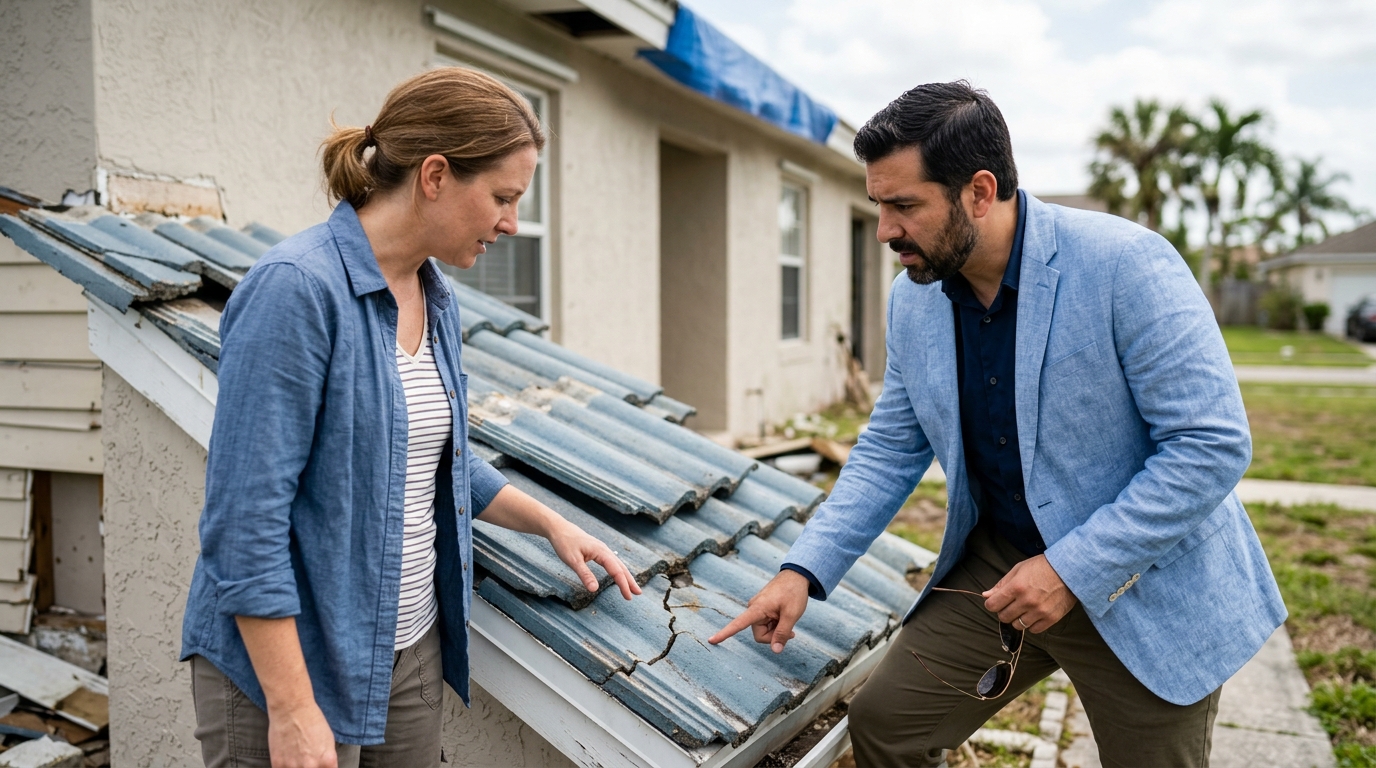
Behind every solid claim is a paper trail built by people who know construction, not just paperwork. Licensed contractors and engineers get brought in to inspect roofs, foundations, and water intrusion points, producing reports that carry weight an insurer can’t easily dismiss. This is standard practice on roof damage claims, hail damage claims, and fire damage claims alike — anywhere the cause of loss gets disputed.
These experts also help translate technical damage into dollar figures the adjuster can’t wave away. Recovery timelines vary wildly by storm severity; looking back at Florida’s hurricane Ian recovery six months later shows how slow full payouts can be even with strong documentation. Some claims settle in weeks. Others drag for over a year.
When insurers still refuse to pay fairly despite solid evidence, that’s when litigation or a bad-faith action gets prepared. Not every case needs a courtroom. But knowing when to escalate — and having the documentation ready to back it up — is what actually moves a stalled claim toward payment.
Types of Property Damage Covered Under Hurricane Claims
Hurricanes don’t cause just one kind of damage. They cause a chain of damage, and each link needs its own kind of proof. A cracked roof tile matters, but so does the water that snuck in underneath it three weeks later. Insurers know this, and they’ll often pay for the obvious harm while fighting you on everything downstream. Knowing the categories of covered damage ahead of time helps you document each one correctly, before an adjuster gets the chance to lump them together and lowball the total.
| Damage Type | Common Cause | Key Evidence Needed |
|---|---|---|
| Roof damage | Wind uplift, flying debris | Photos, shingle count, contractor estimate |
| Water intrusion | Roof breach, wind-driven rain | Moisture readings, interior photos, timeline of exposure |
| Mold growth | Unresolved or delayed water damage | Lab testing, remediation invoices, humidity logs |
| Fire damage | Electrical failure, downed lines during storm | Fire department report, electrician assessment |
| Structural damage | Wind pressure, saturated framing, foundation shift | Engineering report, load-bearing inspection |
Notice how each row needs a different type of proof. That’s not an accident. Insurers lean on the fact that most homeowners only document the visible stuff, like a torn roof, and skip the slower damage, like mold, that shows up weeks later. Reviewing practical tips for assessing property damage for insurance claims before you file can help you catch damage you’d otherwise miss. And if the loss involves both wind and rising water, understanding how coverage limitations for wind and flood damage work matters, since standard policies often treat them very differently.

Insurance Bad Faith: When Your Insurer Crosses the Line
Recognizing Bad-Faith Tactics
Under Florida law, an insurer owes you a duty of good faith. That means fair, honest handling of your claim, start to finish. When a carrier breaches that duty, it’s called bad faith, and it’s a separate legal wrong from just getting your claim number crunched incorrectly. State statutes give policyholders a real path to hold insurers accountable, and fighting insurance bad faith in Florida requires knowing your rights before you sign anything or accept a check.
Common tactics include dragging out inspections for months, offering a fraction of what repairs actually cost, or simply ignoring photos and contractor estimates you’ve already submitted. Sound familiar? It should. These moves show up in hurricane, roof, and even water damage disputes constantly. An adjuster who never returns calls, or who “loses” your documentation twice, isn’t being careless. That pattern is evidence.
Here’s the line: a simple underpayment might reflect an honest, if wrong, read of your policy. Bad faith is different — it’s a pattern of unreasonable conduct, not one bad estimate. If proven, remedies can go beyond the policy limit itself, including extra-contractual damages that cover consequential losses the insurer’s delay actually caused you.
Contingency Fees and What a Free Consultation Includes
Here’s the basic deal: no fees unless the case is won. A property attorney working on contingency only gets paid out of the settlement or judgment, so there’s no invoice for opening a file, reviewing your policy, or sending a demand letter. That structure matters because it lines up incentives — the attorney only earns something if you actually recover money. It’s also why the free evaluation exists in the first place. There’s no cost to finding out where you stand.
Steps in a Typical Free Case Review
A free consultation isn’t just a sales call. It typically includes a policy review to check coverage limits and exclusions, plus an initial damage assessment based on your photos, estimates, and any denial letter you’ve received. Bring what you can — the more documentation, the faster the read on your claim’s strength. The table below walks through what usually happens, in order.
| Step | What Happens | What You Should Bring |
|---|---|---|
| 1. Initial call | Basic facts gathered: date of loss, insurer, claim status | Claim number, insurer contact info |
| 2. Policy review | Coverage limits, exclusions, and deadlines checked | Full policy document, declarations page |
| 3. Damage assessment | Photos and contractor estimates compared to insurer’s figures | Photos, videos, repair estimates |
| 4. Denial analysis | Insurer’s stated reasons for denial or underpayment examined | Denial letter, adjuster reports |
| 5. Value estimate | Rough recovery range given based on similar past claims | Prior correspondence with insurer |
Estimating case value before taking a claim isn’t guesswork. Attorneys weigh the damage estimates, policy limits, and how similar claims resolved before deciding whether to move forward, and they’ll often draw on lessons from prior water, mold, or roof damage disputes. If your loss involves water intrusion after roof failure, reviewing guidance on how to maximize a water damage claim can clarify what documentation actually moves the needle. For storm-specific losses, many homeowners also research general background on Hurricane Damage Attorneys before their consultation, just to walk in informed. Either way, a solid review should leave you with a clear next step — not just a vague promise.

Comparing Your Options: DIY Appeal vs. Public Adjuster vs. Attorney
Every option has a cost, and it’s rarely just the money. Filing your own appeal costs almost nothing up front, but you’re going up against an insurer’s adjusters and lawyers with no training of your own. A public adjuster brings real estimating skill to the table, often working for 10% of the payout, yet they hit a wall the moment the insurer stalls or denies in bad faith. That’s the point where legal leverage starts to matter more than paperwork.
| Approach | Typical Cost | Can Negotiate? | Can Sue Insurer? | Best For |
|---|---|---|---|---|
| DIY Appeal | Free (your time only) | Limited | No | Small, clear-cut denials |
| Public Adjuster | ~10% of payout | Yes, on damages | No | Complex estimates, no legal dispute |
| Attorney | Contingency, no upfront fee | Yes, with legal authority | Yes | Denials, underpayment, bad faith |
| Hybrid (Adjuster + Attorney) | Combined fee structures | Yes, full scope | Yes | Large losses, disputed roof or structural claims |
Notice the pattern: only one column changes as you move down the table. Legal authority. A public adjuster can argue over square footage and repair costs all day, but they can’t file suit, compel documents, or threaten a bad-faith action if the insurer keeps dragging its feet. For a modest hail damage claim on a garage roof, an appeal or a public adjuster might genuinely be enough. For a denied hurricane claim worth six figures, that gap in authority is exactly why a property damage attorney can make a difference that estimating skill alone can’t. Cost-wise, contingency fee arrangements mean you’re not paying out of pocket while you wait, which changes the math for a lot of homeowners weighing their options after a storm.
Choosing the Right Hurricane Damage Lawyers for Your Claim
Not every lawyer who handles injury cases or family law can competently take on your insurer. Hurricane claims are a specialized fight. You need someone who knows the policy language, the adjusters’ tactics, and the deadlines that can sink a case before it even starts.
Questions to Ask Before Hiring
Before you sign anything, ask direct questions. A firm that dodges specifics is telling you something.
- Ask whether the firm focuses specifically on property insurance law rather than treating hurricane claims as a side practice among dozens of other case types;
- Ask about their track record, including total settlements recovered and how many cases they’ve actually closed versus taken on and dropped;
- Ask who will handle your file day to day — a managing attorney overseeing strategy, or an associate doing most of the direct work;
- Ask how quickly they respond to calls and emails, and what turnaround time you should realistically expect once you’re a client;
- Ask whether they have a physical presence in Florida and genuine familiarity with the state’s insurance regulations, not just a national mailing address.
Red Flags in Firm Selection
Some warning signs show up early, if you’re paying attention. A firm that won’t quote past results, or gets vague about fees, isn’t one you want negotiating on your behalf. Watch for pressure to sign on the spot — that’s a sales tactic, not legal advice. It also matters to understand how long you have to file a property damage claim, since a firm that doesn’t raise this early may not be tracking your deadlines closely. Firms juggling water damage, mold, roof, fire, and personal injury work aren’t automatically wrong for you — but ask how much of their caseload is actually hurricane-related. Even reviewing how San Antonio Hurricane Damage Lawyers structure client communication can help you set a fair benchmark for what responsiveness should look like here in Florida.
Florida Hurricane Claim Deadlines and Legal Timelines
Why Acting Quickly Protects Your Claim
Florida law gives you a limited window to report hurricane damage. Under current statute, you generally have one year from the date of loss to file an initial notice of claim, or to file a supplemental or reopened claim on an existing one. Miss that window, and your insurer has an easy, automatic reason to deny you. It doesn’t matter how much damage you actually have. Late notice is late notice, and adjusters know it.
There’s a second deadline that matters just as much: the statute of limitations for filing a lawsuit against an insurer once a claim is denied or underpaid. That clock generally runs for years after the breach, but it varies depending on the policy and the timing of the denial, so guessing isn’t a good strategy. Reviewing what happened during past storms, including detailed guidance on filing an insurance claim after Hurricane Idalia, shows how quickly paperwork issues can snowball into missed deadlines.
Documentation is your best friend here. Photograph roof damage, water intrusion, and debris the moment it’s safe to go outside. Keep receipts for tarps, dehumidifiers, and temporary repairs. Every day you wait, evidence fades, contractors get booked solid, and mold spreads. Delay doesn’t just risk missing a deadline. It quietly erodes the value of a claim that was strong to begin with.
Frequently Asked Questions About Hurricane Damage Claims
Hurricane claims raise the same questions over and over. Here are the ones worth knowing before you’re caught off guard.
What will the insurance company’s adjuster ask me?
Expect questions about when the damage happened, what repairs you’ve already made, and whether you had prior damage from an earlier storm. Be honest, but don’t guess or speculate. If you’re not sure of an answer, say so. Recorded statements can be used against you later, so think before you speak.
What counts as a breach of contract?
A breach of contract happens when your insurer fails to do what your policy requires, whether that’s paying a valid claim, paying it fully, or paying it on time. It’s the legal foundation for most hurricane lawsuits.
Why do hurricane claims get denied so often in Florida?
Denials usually come down to a handful of recurring excuses. Understanding them helps you push back:
- The insurer claims the damage existed before the storm, calling it “pre-existing wear” rather than storm-related harm.
- The adjuster argues the damage falls under a flood exclusion instead of wind, shifting responsibility to a separate flood policy.
- Paperwork was filed after the policy’s notice deadline, giving the insurer a technical reason to reject the claim.
- The estimate submitted doesn’t match the insurer’s own inspection, leading to a lowball counteroffer instead of a denial.
- The policy excludes certain types of roof or cosmetic damage entirely, a common issue in reasons water damage insurance claims get denied in florida.
How long does a hurricane lawsuit actually take?
It varies. Some cases settle in a few months once litigation pressure kicks in. Others, especially ones headed to trial, can run a year or longer. Complex cases involving Fort Lauderdale Hurricane and Property Damage Claim disputes often take longer simply because of scope.
Can I switch attorneys mid-claim?
Yes. You’re allowed to change representation at any point, though it may involve transferring your file and settling fee arrangements with your prior attorney first.
If a hurricane has left you fighting your insurance company instead of rebuilding your home or business, the team at Krapf Legal is ready to help, having already recovered over $58,000,000 for property owners across Florida. Stop by their Clearwater office at 2790 Sunset Point Rd, or call +1 727 777 7450 for a free case consultation — there are no fees unless they win your case, and someone will reach out within 1-2 business days to get you started.